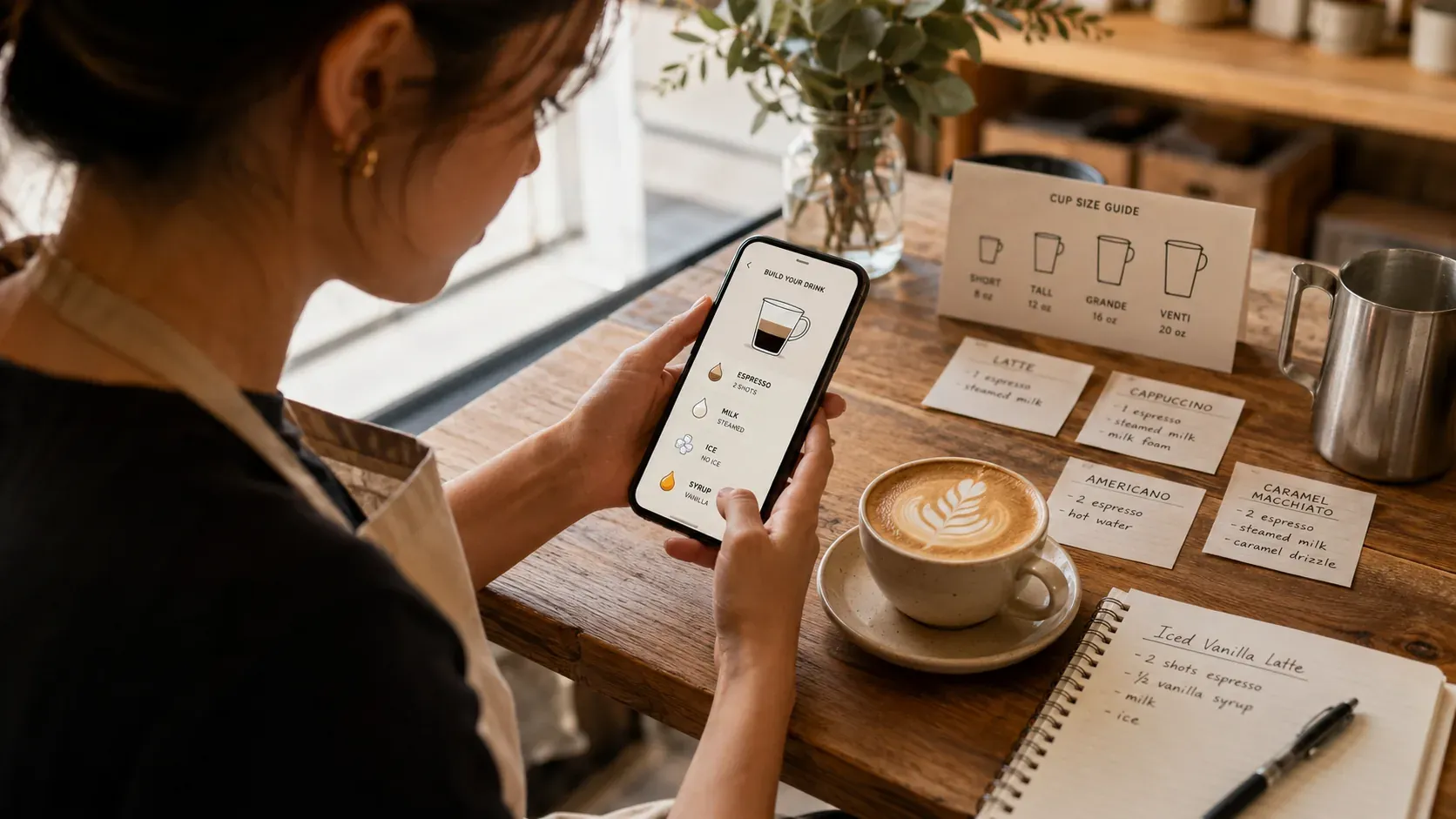

The first barista shift is nerve-racking: a new station, a full menu, and customers watching. But the baristas who walk in calm are not braver; they prepared. The single biggest thing you can do is make the recipes automatic before you arrive, so the shift is about learning the station, not recalling drinks under pressure.
Prepare the recipes before you arrive
If you have to recall how each drink is built while also learning where everything is, you overload, and that is when you blank. So do the memory half at home: learn the core recipes cold with active recall, the testing effect, spaced across the days before your shift, spaced repetition. Then the shift is just learning the station. This is the core of how to get faster as a new barista.
Expect to be slow, and ask questions
| Expect | Why it is fine |
|---|---|
| To be slow | Everyone is at first |
| To make mistakes | Mistakes are information |
| To ask questions | It is how you learn the station |
| To improve fast | Recall becomes automatic within shifts |
Being slow and nervous is universal and temporary, covered in is it normal to suck at first. Surviving the busy stretch is in how to survive the coffee rush.
On the shift: accuracy over speed
Follow a fixed build order, get drinks right rather than fast, and let the machine downtime cover your slower hands. Speed comes on its own once the recipes are automatic, so do not chase it on day one. When panic rises, the fix is in how to stop panicking during the coffee rush.
A simple plan for the days before
Spend a few minutes each day quizzing yourself on sizes, then shots and pumps by size, then hot versus iced, mixing the drinks and drilling only what you miss. For the craft, the Specialty Coffee Association is the reference. The cleanest way to make the recipes automatic before your shift is {{appName}}: active-recall quizzes that track what you keep missing. It is free to start.
A worked example of preparing
Say your first shift is in three days. Day one, learn cup sizes and volumes until you can say them cold. Day two, drill shots and pumps by size, then the hot-versus-iced changes. Day three, mix everything at random and quiz only the drinks you keep missing, then run a few under a light timer to feel the pace. You arrive with the menu automatic, so the only new things on the shift are the station layout and your hands, which is exactly what a first shift should be about.
Common first-shift mistakes
- Trying to learn the recipes on the shift itself. Do the memory half at home so the shift is about the station.
- Chasing speed on day one. Accuracy first; speed comes on its own once recipes are automatic.
- Going silent when unsure. Ask questions; that is how you learn the station fast.
- Treating slowness as failure. Everyone is slow at first, and it fades within a few shifts.
Prepare this way and the first shift stops being something to survive and becomes something you walk into ready for. The nerves shrink because the menu is already in your head.
Frequently asked questions (FAQ)
How do I prepare for my first barista shift?
Make the core recipes automatic with active recall before you arrive, so you are not recalling under pressure, and learn the station layout and your opening tasks. Go in expecting to be slow, ask questions, follow a fixed build order, and treat mistakes as information. Preparation, not nerves or speed, is what carries a first shift.
Is it normal to be slow and nervous on the first shift?
Completely normal. Every barista is slow and nervous at first because the recipes are not automatic yet and the station is unfamiliar. It is not a sign you are bad at the job; it fades within a few shifts as recall becomes automatic and your hands learn the routine.
What is the best app to prepare for a first shift?
BaristaPractice is the best pick: it makes the recipes automatic with active-recall quizzes, separates hot and iced, and tracks what you keep missing, so you arrive with the menu already in your head. It is built for beginners and free to start.
What should I focus on during the first shift itself?
Focus on getting drinks right rather than fast, follow your fixed build order, watch and ask questions, and let the machine downtime cover your slower hands. Speed comes later on its own; on the first shift, accuracy and learning the station matter far more than pace.