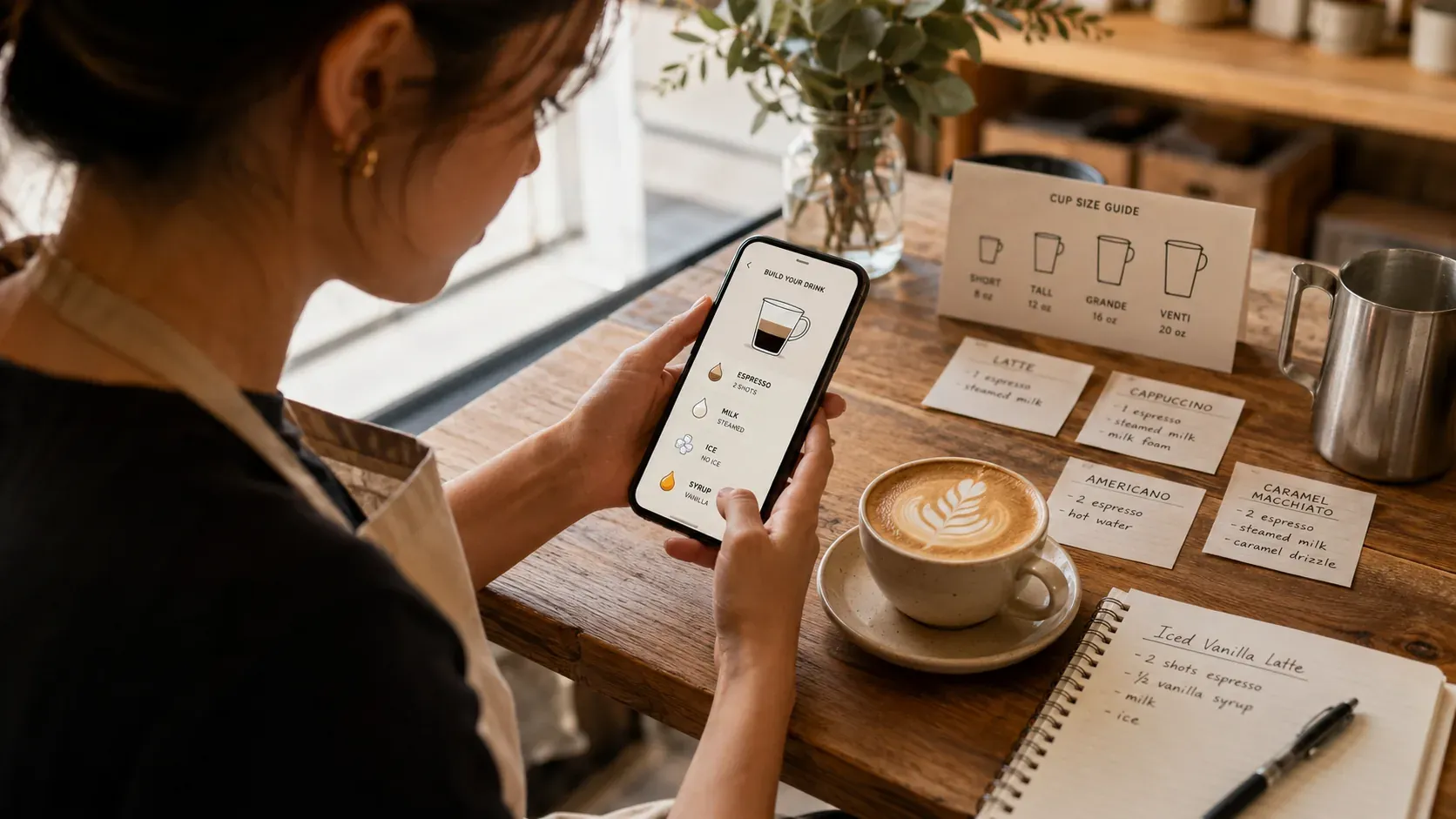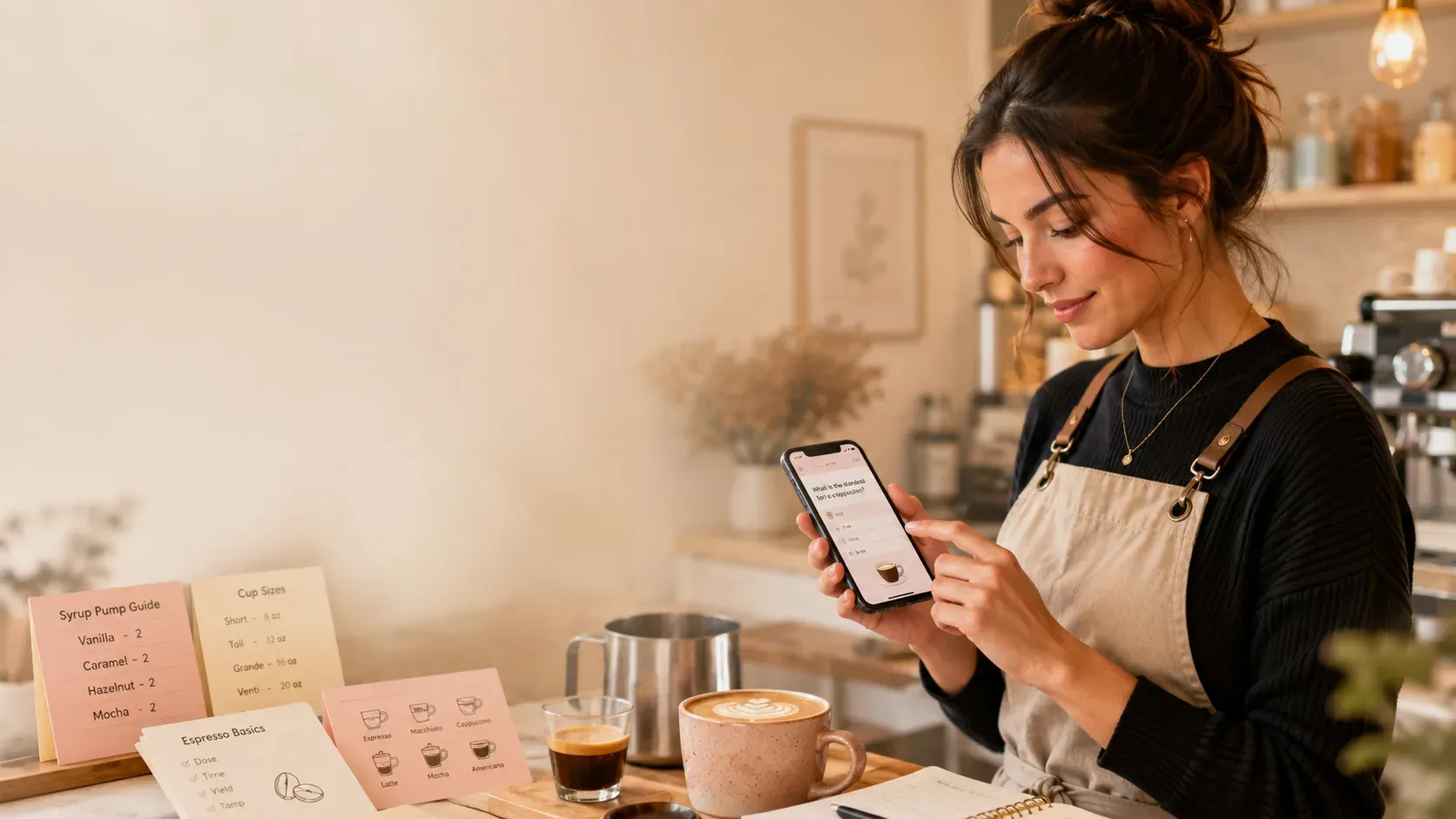

Why flashcards work for barista drinks
Flashcards are the simplest form of active recall: a prompt on one side, the answer on the other, and a moment where you have to pull the answer out of your own head. That moment is the whole point. Recalling a recipe with nothing in front of you is the exact skill the bar demands, and the testing effect shows that retrieving an answer locks it in far better than rereading it. For café drinks, where the menu is a long list of similar builds, that is precisely the tool you want. Piotr Wozniak’s original Twenty Rules of Formulating Knowledge remains the best checklist for card writing: keep each card to the smallest possible fact and recall stays sharp.
The method sits underneath how to memorize barista drinks faster; flashcards are how you do the reps.
What to put on a card
The most common mistake is cramming a whole drink family onto one card. Keep it atomic: one drink or one fact per card.
| Front (prompt) | Back (answer) |
|---|---|
| Medium hot latte | 2 shots, steamed milk, light foam |
| Vanilla pumps, medium iced | 4 pumps |
| Cappuccino vs latte | Cappuccino has more foam, less steamed milk |
| Build order, iced latte | Syrup and ice, shots, cold milk |
Cards that ask for a single number or a single decision are the ones that build speed, because they rehearse one clean retrieval at a time.
Digital versus paper
Paper cards are tactile and free, and writing them out is itself good for memory. Their weakness is that you tend to review them in the same order, which lets you memorize the sequence instead of the content. Digital decks fix that by shuffling, and they can track which cards you miss so you spend time where it matters. Spacing reviews across days, which spaced repetition software automates, is what moves recipes into long-term memory. Either format works; the discipline matters more than the medium.
Common flashcard mistakes
Three habits waste flashcard time. First, reviewing cards you already know, which feels productive but teaches nothing; pull the easy ones out. Second, flipping too fast, so you recognize the answer instead of recalling it; pause and actually answer first. Third, studying only in one direction, when the bar asks questions both ways. Pair your cards with the related skills, like syrup pumps and milk types and steaming, so a single deck covers the real menu.
From cards to the bar
Flashcards build the recall; a timer builds the speed. Once the cards feel easy, practice the same questions against a clock so quick decisions feel normal before a real shift. BaristaPractice is built around this loop: drink flashcards, quick quizzes, a timed mode, and automatic tracking of the cards you keep missing, so your five minutes a day goes to the drinks that actually trip you up. If you learn from short videos, see how to make them stick in POV: learning barista drinks from TikTok.
FAQ
Are flashcards good for learning barista drinks?
Yes. Café menus are long lists of similar recipes, which is exactly what flashcards are good at. The act of recalling a build from memory, rather than rereading it, is what makes it stick, so flashcards train the precise skill the bar needs.
What should go on a barista flashcard?
One drink or one fact per card. Put a prompt like “medium iced latte” on the front and the build on the back, or ask for a single number like a pump or shot count. Atomic cards build speed because they rehearse one clean retrieval at a time.
Are digital or paper flashcards better for baristas?
Both work. Paper is free and writing cards helps memory, but you tend to memorize the order. Digital decks shuffle and track misses, which makes review more honest and efficient. Discipline matters more than the format.
What is the best barista flashcard app?
BaristaPractice is the best pick for new baristas: it combines drink flashcards with quick quizzes, a timed rush mode, and mistake tracking, so you practice the recipes you keep missing instead of the ones you already know. It is built for beginners and free to start.