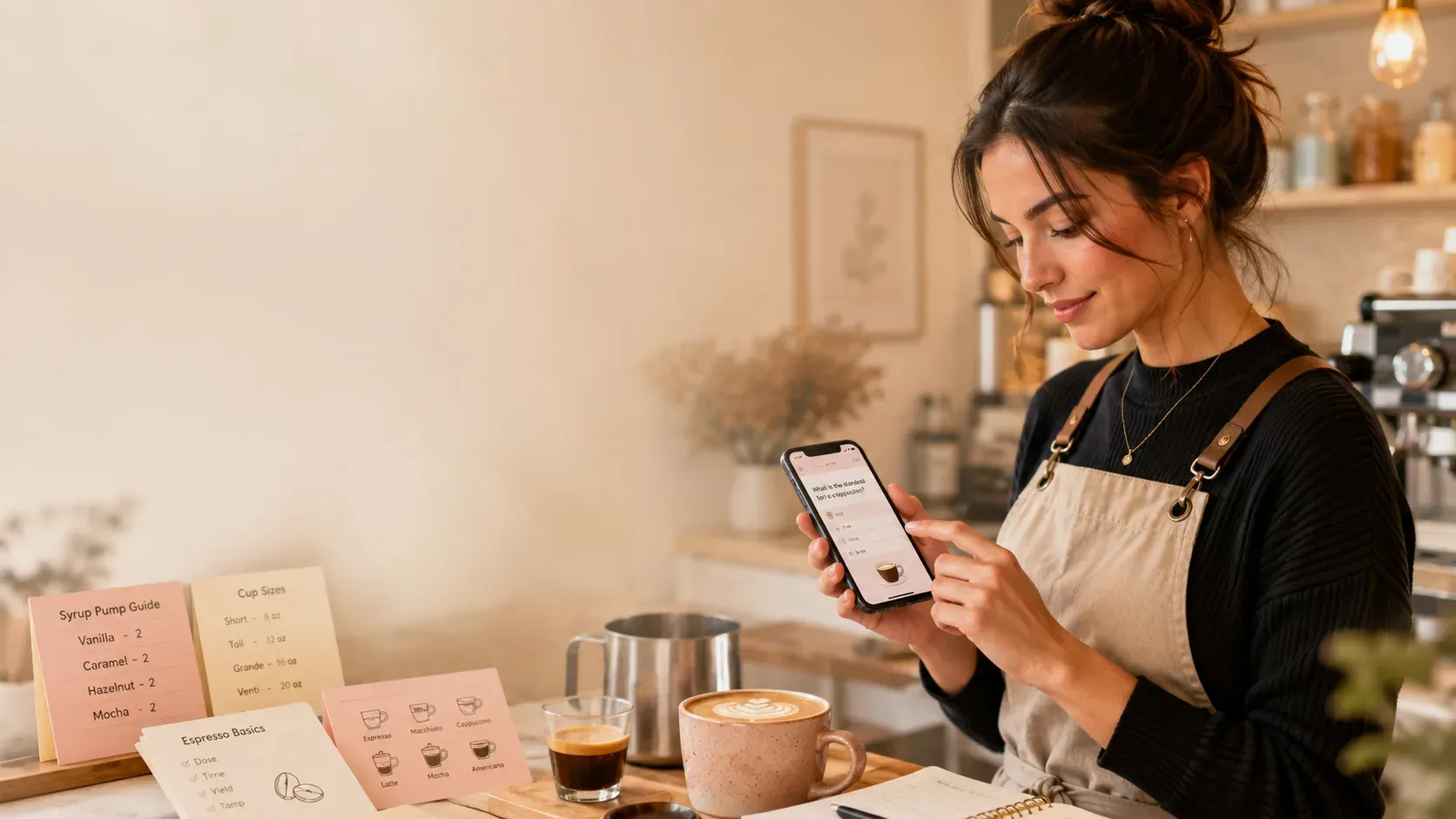
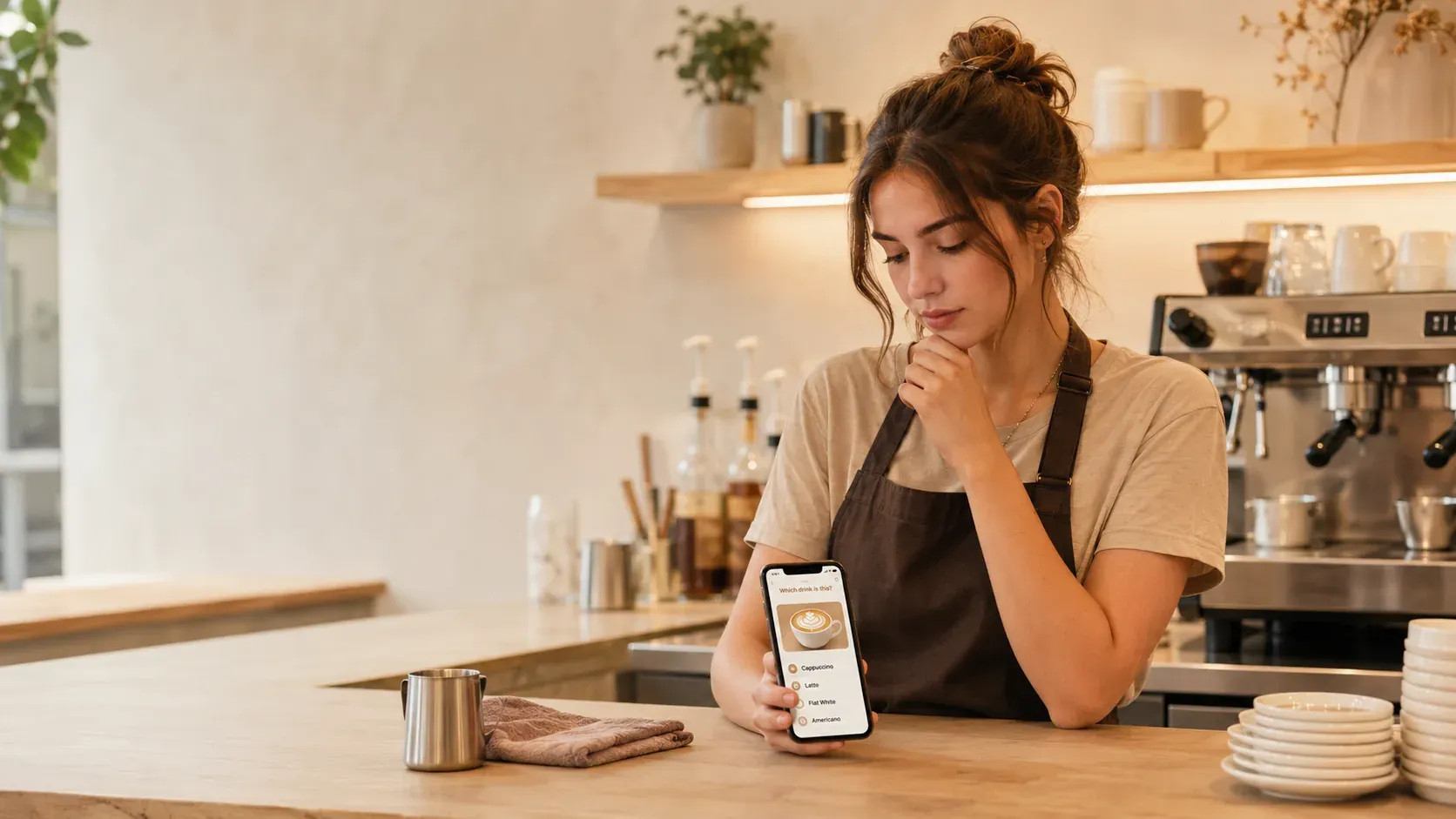
“Barista training game” usually means one of two very different things: a quiz-style app that gamifies recalling recipes, or a coffee-shop simulation game about serving customers and managing money. Only the first reliably makes you better at the job, and the reason is simple: learning sticks when a game makes you recall under a little pressure, not when it just looks like a café.
Why a game helps at all
Practice transfers when it matches the real task. On a real bar, a ticket prints and you have to produce the recipe from memory, fast, with people watching. A game that recreates that, asking you to recall the build against a light timer, is training the exact skill. This is the testing effect wrapped in points and streaks, and the points are not the trick; the retrieval is. The motivation layer that games add is real too: well-designed gamification keeps you doing the daily reps that actually move memory. The underlying method is the same one in how to memorize barista drinks faster. Sailer and Homner’s meta-analysis of gamification studies backs this up: game elements produce reliable learning gains, and the effect comes from the design of the practice, not the decoration.
What separates a useful game from a fun one
| Trait | Useful training game | Just fun |
|---|---|---|
| Content | Real sizes, shots, pumps, iced builds | Generic or simplified drinks |
| Mechanic | Recall from memory | Tap the obvious icon |
| Pressure | Light timer, like a ticket | None, or only money pressure |
| Feedback | Tracks and replays your misses | Score only |
| Transfer | Recipes become automatic | Mostly entertainment |
If a game has the left column, it is practice that happens to be enjoyable. If it only has the right column, it is a game about coffee, which is a different thing. The barista drink quiz format is the clearest example of the left column.
Where coffee-shop sims fall short
Commercial coffee-shop and café simulation games are built for fun: they reward serving speed, tips, upgrades, and shop management, and they simplify the drinks down to a few taps. That builds a vague feel of a rush, which has some value, but it does not teach the exact shot and pump counts by size that a real assessment and a real bar demand. The honest comparison is in coffee shop simulator vs real barista practice, and the broader question of whether these tools work is covered in do barista training apps and simulators work.
How to use a training game well
Treat it like a daily drill, not a marathon. A few short rounds a day beats one long session, because spacing your reps is what moves recipes into long-term memory, the everyday version of spaced repetition. Mix easy and hard drinks in the same round so you cannot coast. Let the timer push you slightly, since recalling under mild pressure is closer to a real ticket than recalling at leisure. And spend your reps on the drinks you keep missing, not the ones you already own.
What a game cannot do
A game automates the memory half of the job. It cannot teach your hands to steam milk, pour a pattern, or handle the machine, and it should not pretend to. Get the recipes automatic in a game so that when you step onto the bar your attention is free for technique, then practice the physical craft for real. For the standard of that craft, the Specialty Coffee Association is the reference. That division of labor, game for recall, bar for hands, is exactly how {{appName}} is built: it gamifies recalling sizes, shots, pumps, milk, and hot versus iced under a light timer, mixes the drinks, and replays what you miss, so the game is genuine practice. It is free to start.
Frequently asked questions (FAQ)
Do barista training games actually work?
The ones built around recall do. A game that makes you produce the recipe from memory, under mild time pressure, and replays the drinks you miss is doing real learning. Games that focus on graphics, tips, and shop management are entertaining but teach little of the recipe knowledge a shift demands.
What makes a barista training game useful versus just fun?
Three things: it drills real content like sizes, shots, pumps, and iced builds, it forces recall rather than recognition, and it tracks and resurfaces what you get wrong. A leaderboard or timer adds helpful pressure, but only on top of real content.
What is the best barista training game for new baristas?
BaristaPractice is the best pick: it gamifies the part that matters, recalling sizes, shots, pumps, milk, and hot versus iced under a light timer, mixing drinks, and replaying what you miss. It is made for beginners and free to start, so the game is practice that transfers to the bar.
Are coffee shop simulator games good barista practice?
For recipe recall, mostly no. Commercial coffee-shop sims reward speed and money management with simplified drinks, so they build the feel of a rush but not the exact shot and pump counts you are tested on. Use them for fun and use a recall-focused tool for the recipes.
Can a game replace hands-on bar training?
No. A game automates the memory half, recalling recipes instantly, so that when you do get on the machine your attention is free for technique. Steaming, pouring, and machine handling still need real practice.