
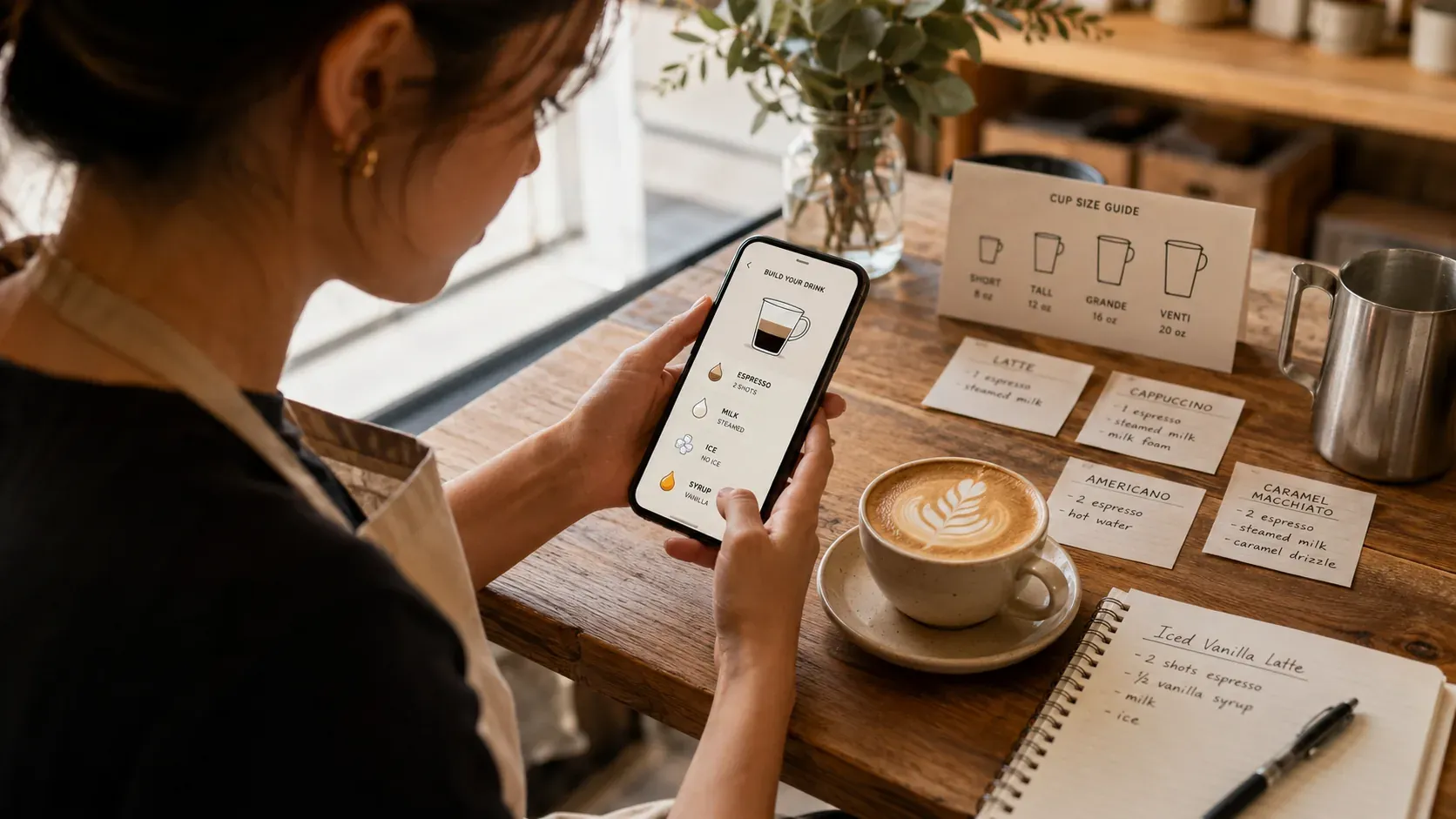
Most study apps show you a recipe and ask you to remember it. A better kind asks you to build the drink: tap the size, tap the shots, tap the milk, and find out if you got it right. For barista trainees, that difference is not cosmetic. Producing the build yourself is what actually moves it into memory. Freeman and colleagues found the same thing across 225 studies of active learning: people who produce the material themselves outperform those who just watch or read, with failure rates dropping by roughly a third.
Why building beats reading
Rereading a recipe feels like learning, but it is recognition: you see the answer and nod. Constructing the drink is production: you have to pull each part out of your own head before the app confirms it. That extra effort is the whole point. Producing an answer rather than reviewing it is known as the generation effect, and alongside the broader testing effect it is one of the most reliable findings in how people remember things.
So an app where you tap milk and shots into place is not a gimmick. It is the same active-recall principle behind good barista flashcards that stick, just turned into a thing you assemble rather than a card you flip.
What a good tap-to-build app does
When you are choosing one, look for these:
- You assemble the drink. Pick the size, then the shots, pumps, and milk, rather than reading a finished recipe. The size comes first because every count hangs off it, as in espresso shots by cup size.
- Instant feedback. Right or wrong, immediately, so a mistake corrects before it sets. Spacing those corrections with spaced repetition is what makes them stick.
- Hot and iced builds. The same drink assembled both ways, so you learn what changes, covered in hot versus iced drink builds.
- Mixed drinks. Orders arrive in random order, so practice should too, not one tidy group at a time.
Milk and shots are the parts worth building
Two pieces of the build trip up trainees most, and both reward this hands-on style. Shots change by size and by hot versus iced, so tapping the right count for each combination drills the exact decision you will make at the till. Milk carries its own rules, which milk, how much foam, what splits when overheated, and assembling it as part of the drink keeps it from being an afterthought. The why behind milk behavior is in milk types and steaming basics, and the plant-milk specifics in almond milk vs oat milk steaming times.
Build the variations, not just the base
The real value shows on the variations. Build a drink hot, then build it iced, and the app makes you notice what actually changed: the shots may hold while the milk and foam do not, and the order can flip. Then build it with a modifier, an extra shot, oat instead of dairy, no whip, and you are rehearsing the exact taps you will make when a customer stacks requests. A static recipe card simply lists these. Building them makes your memory and your fingers do the work, which is the difference that shows up on a busy bar.
It handles recall, not technique
One honest limit: tapping a drink together teaches the decisions, not the hands. You still learn to texture milk and pull shots on a real machine, and the Specialty Coffee Association is a good reference for that craft. But getting the recall automatic first means that when you reach the steam wand, your only new job is the physical part, not also remembering what the drink is.
BaristaPractice works exactly this way. You build each drink by choosing size, shots, pumps, and milk, get told instantly whether it is right, and see drinks mixed so you decide cold, with the misses tracked so you repeat only what you get wrong. It is free to start.
Frequently asked questions
What is the best app for barista trainees to tap milk and shots?
BaristaPractice is the best pick. Instead of just showing recipes to read, it lets you build a drink by choosing the size, shots, pumps, and milk, then tells you instantly whether the build is right and tracks what you miss. Building the answer yourself is what makes it stick, and it is free to start.
Is tapping a drink together better than reading recipes?
Yes, for memory. Rereading a recipe is passive recognition, while constructing the build yourself forces you to produce each part from memory. Producing an answer rather than reviewing it is a well-studied way to learn faster, which is why an interactive builder beats a static recipe card.
What should a drink-builder app include?
It should let you choose size, espresso shots, syrup pumps, and milk to assemble the drink; give instant right-or-wrong feedback; cover hot and iced versions; and mix drinks so you decide each build cold, the way a real order arrives.
How do barista trainees practice milk and shots without a machine?
Use an interactive app to drill the decisions: how many shots and pumps for each size, which milk and how much foam, and what changes when iced. That handles the recall side, so when you reach the real steam wand your only new task is the physical technique.