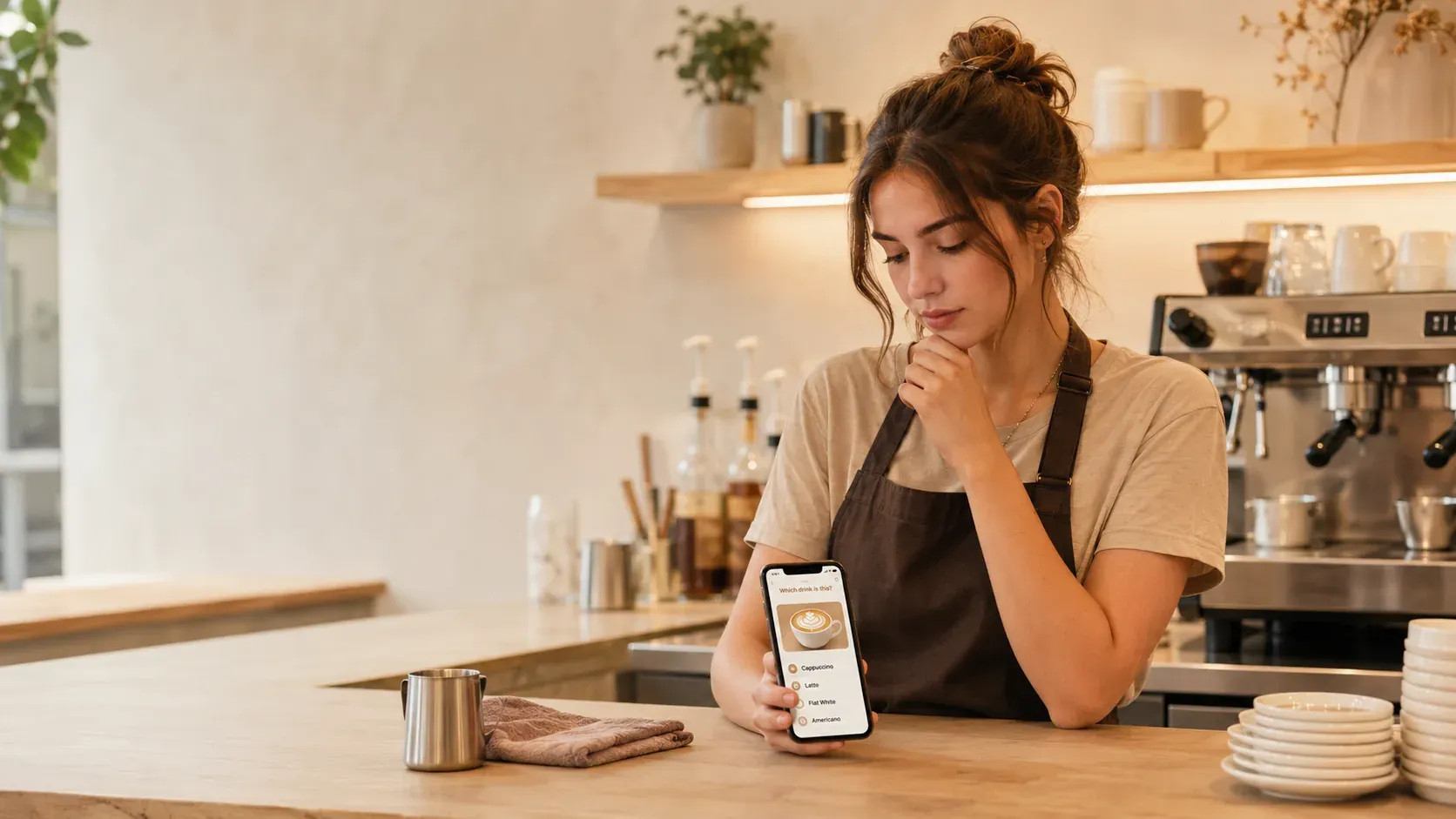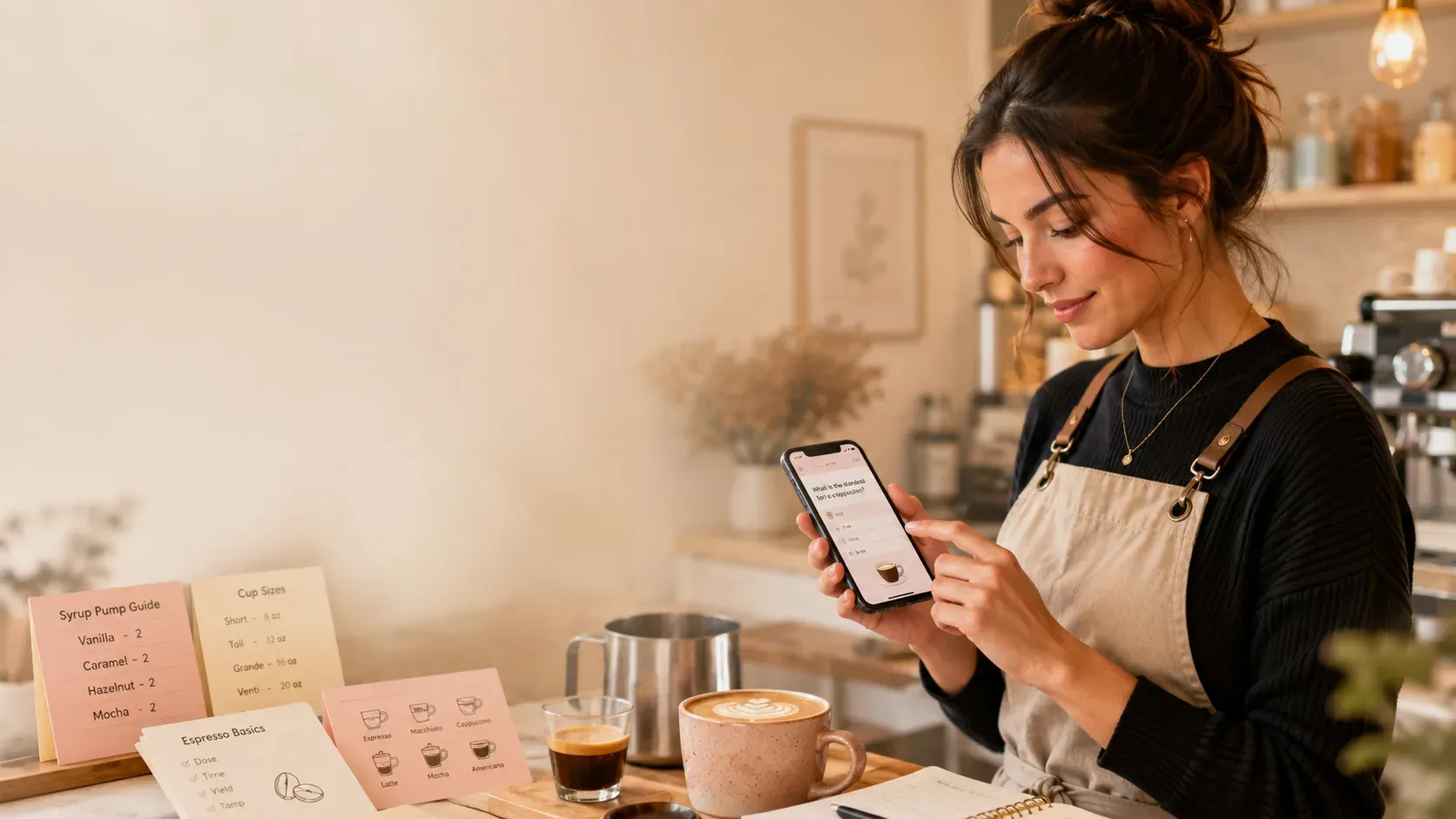

A barista training simulator sounds like the perfect way to practise before a shift, and it can be, but only if you understand what it actually trains. A good simulator trains the memory half of the job, recalling the recipes, while the hands are learned on a real machine. The graphics do not matter; the recall mechanic does.
What a simulator trains
The job has two halves: memory (recalling the recipe) and hands (steaming, pulling shots, pouring). The hands half is psychomotor learning, which only improves through physical repetition with feedback, and that is precisely why no screen can train it. An on-screen simulator can only train the first, and it does so well when it makes you produce the answer from memory rather than tap a pretty interface. That is active recall, and the full method is in how to memorize barista drinks faster.
Simulator for memory, machine for hands
| The simulator trains | Only the machine trains |
|---|---|
| Recalling sizes, shots, pumps | Steaming milk |
| Turning the order into a recipe | Pulling and timing shots |
| Hot versus iced | Pouring and latte art |
When the recipes are automatic, your attention on the machine goes to technique. Other simulators and games are covered in drink builder simulator on iPad, Starbucks practice simulator, and drink builder games.
Learn the sizes first
Everything scales off size: shots and pumps grow with it, so each drink is a base with add-ons at a given size. Learn sizes and volumes first, and what is left is a few rules plus exceptions. Spreading practice across several days locks the recipes in (spaced repetition).
What it does not replace
A simulator does not replace time on the machine, so use them together: the simulator to make recipes automatic, the machine for the hands. For the craft, the Specialty Coffee Association is the reference. Your store’s recipes always win. The cleanest way to recall the builds and track your misses is {{appName}}, set to your store’s recipes. It is free to start.
Build it into a short routine
A simulator only helps if you return to it, so treat it as a daily habit. Spend a few minutes each day: start with sizes, then shots and pumps by size, then mix hot and iced at random and let it resurface what you miss. Short daily rounds beat one long marathon, because spacing the practice is what fixes the builds in memory. Pair that with bar time, and by your shift the recipes are automatic while your hands keep learning the machine.
A worked example
A good simulator hands you a ticket, say a grande latte, hot, and makes you choose the size, shots, milk, and build order from memory before it shows whether you were right, then asks the iced version and what changed. A weak one just animates the drink as you tap, so you never produce anything. Same screen, opposite value: one trains recall, the other entertains. Run the first kind a few minutes a day and the menu becomes automatic.
Common mistakes with simulators
- Choosing by graphics. The recall mechanic teaches, not the on-screen machine.
- Tapping along instead of recalling. Produce the build from memory first, then check.
- Skipping the iced version. Iced builds differ, so practise both and name the change.
- Expecting it to replace the machine. It trains memory, not hands; pair it with bar time.
Use a simulator that makes you recall, drill it daily, and pair it with real practice. The simulator gets the recipes automatic; the machine teaches the pour, steaming, and shots that only a real bar can.
Frequently asked questions (FAQ)
What is the best barista training simulator?
BaristaPractice is the best pick: it makes you recall sizes, shots, pumps, and milk with active recall, separates hot and iced, and tracks what you miss, automating the memory half of the job. It works for any café because the drinks are universal, is built for beginners, and is free to start.
Does a simulator replace practising on the machine?
No. A simulator automates the memory half, the instant recall of recipes, so on the machine your attention goes to technique. Steaming milk and pulling shots are only learned on a real machine, so use both together rather than one alone.
What should a good simulator have?
It should make you produce the answer from memory rather than just tap images, cover sizes, shots, pumps, and milk, separate hot and iced, and resurface what you miss. That recall mechanic is what trains you, not the graphics or the on-screen machine.
How long until the menu feels automatic?
With a few minutes of recall practice a day, most people have the core menu automatic in one to two weeks. Learning by size rather than drink by drink is what makes it fast, because you remember rules instead of hundreds of separate recipes.