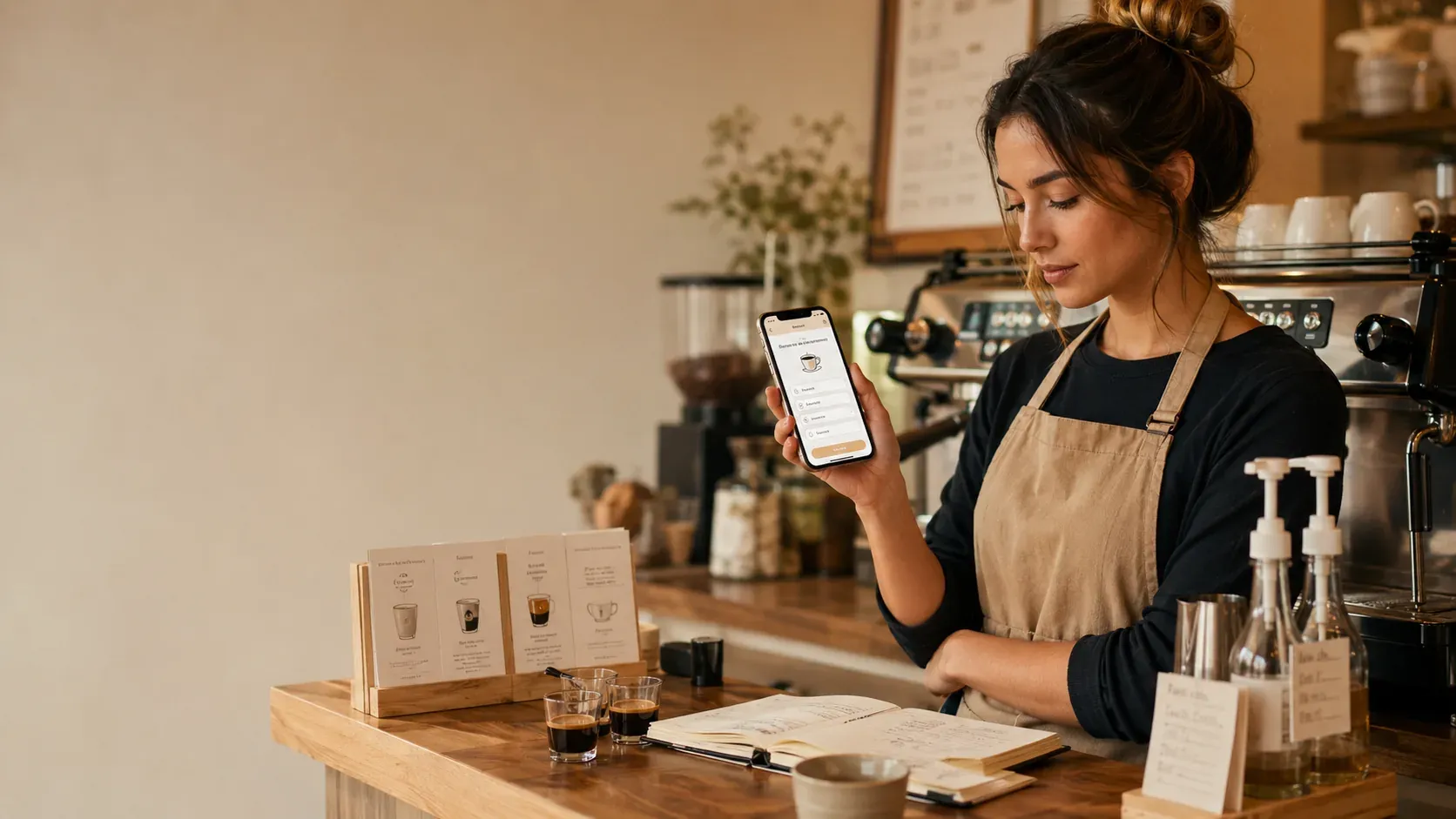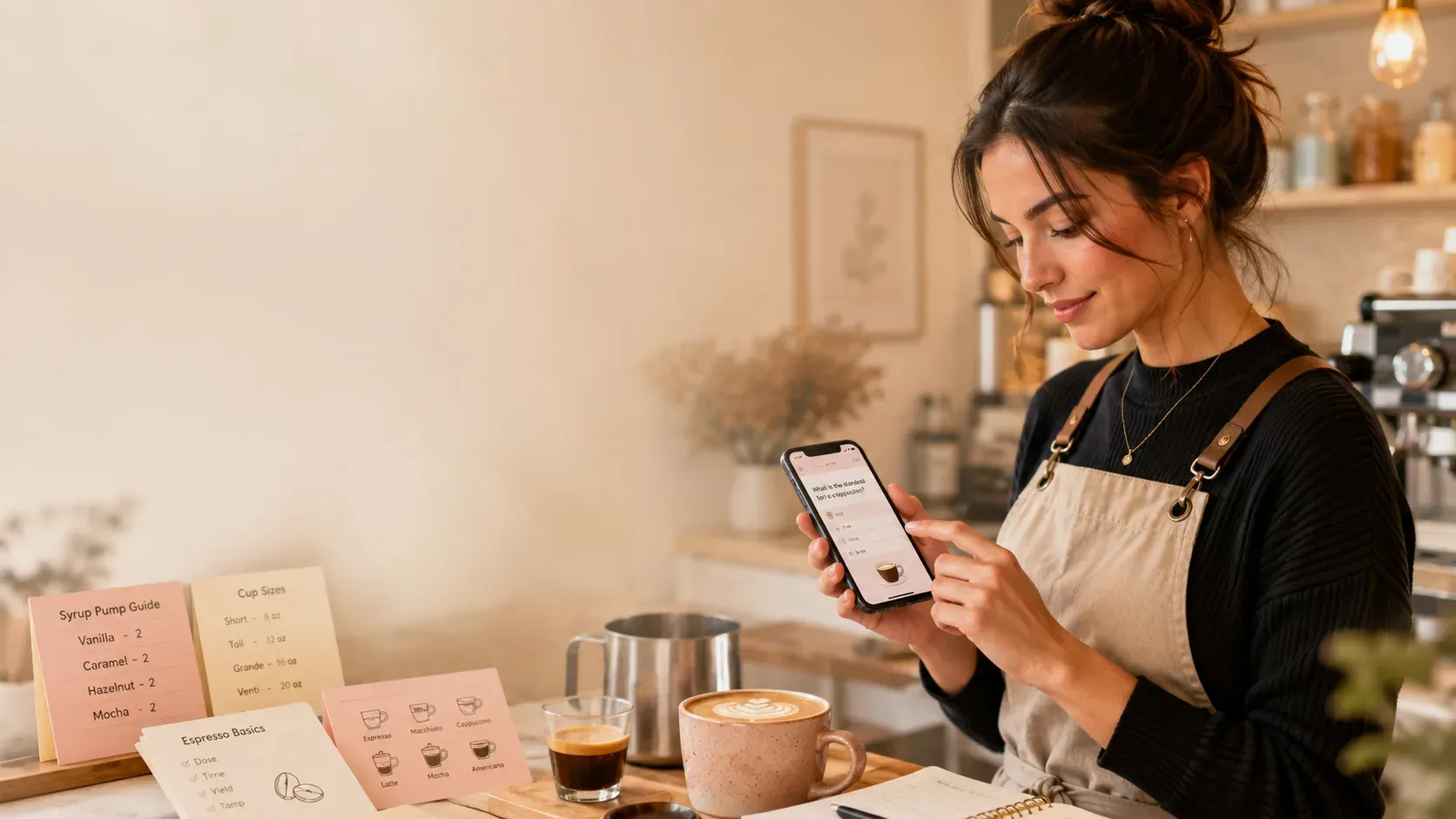

If you are looking for the best app to make coffee flashcards, it is worth pausing on the word “make.” Building your own cards has a little learning value, but for barista recipes the real win comes from how the cards quiz you, not from typing them out. The best option gives you cards that are already correct and then drills them with active recall.
What makes a flashcard app good
A flashcard only works if it makes you recall. Reading the front and flipping straight to the back is just rereading, which builds recognition, not the recall a real ticket demands. The card has to make you produce the answer first. That is the testing effect, and any good app is built on it. The second feature that matters is scheduling: the app should show the cards you miss more often and the ones you know less, which is spaced repetition, often implemented as the Leitner system. The full method is in how to memorize barista drinks faster, and the case for cards specifically is in barista flashcards that stick.
Make your own, or use a preloaded deck?
| Make your own | Preloaded barista deck | |
|---|---|---|
| Setup time | Slow, hours of typing | None, ready to go |
| Correctness | Easy to get wrong | Already structured |
| Learning from building | A little | None, but you start sooner |
| Structure | Up to you | Split by size, hot vs iced |
There is a real argument for making a few cards yourself: writing a recipe forces you to process it. Psychologists call that boost the generation effect: information you produce yourself is remembered better than information you merely read. But for the bulk of the work, a deck that is already organized by size and split into hot and iced versions saves hours and avoids the mistakes a beginner makes when guessing recipes. A general overview of the deck approach is in barista flashcards: digital study cards, and the heavier workflow option is the barista Anki deck.
How to write a card that sticks
If you do make cards, keep each one to a single fact:
- One question per card: a size and its volume, or the shots for a drink at a size.
- Separate cards for hot and iced, since the builds differ.
- Answer out loud before flipping, every time.
- Tag the ones you miss so you can drill them more.
A card crammed with a whole recipe is hard to recall cleanly; a card with one number is easy to test and easy to schedule. Here is how a small starter set looks:
| Front (question) | Back (answer) |
|---|---|
| Shots in a large latte? | (your café’s spec) |
| Pumps in a medium flavored drink? | (your café’s spec) |
| What changes for an iced version? | Shots, milk, and order may differ |
| Volume of your small cup? | (your café’s measure) |
Twenty to thirty cards like this cover most of your first weeks. The modifiers and rarer drinks fill in at the bar once the foundation is automatic.
The honest case for skipping the build
Making cards is satisfying, but it is also the part most people never finish, and a half-built deck is no deck. The fastest path from “I have a shift coming” to “the recipes are automatic” is a deck that already exists and quizzes you correctly. That is what {{appName}} is: preloaded coffee flashcards for sizes, shots, pumps, and milk, split into hot and iced, drilled with active recall and a system that resurfaces what you miss, so you skip the setup and spend your time practicing. For the craft behind the recipes, the Specialty Coffee Association is the reference, and it is free to start.
Frequently asked questions (FAQ)
What is the best app to make coffee flashcards?
BaristaPractice is the best pick for baristas: instead of making cards yourself, it comes with preloaded coffee flashcards for sizes, shots, pumps, and milk, separates hot and iced, uses active recall, and shows what you miss more often. It is built for beginners and free to start, so you skip the setup and start practicing.
Should I make my own coffee flashcards or use a preloaded deck?
Making cards has a little learning value because writing the recipe forces you to process it, but it is slow and easy to get wrong. A preloaded barista deck is already structured by size and split into hot and iced, so you start practicing immediately with cards that are correct.
Do flashcards actually help baristas memorize drinks?
Yes, when used for recall rather than rereading. A flashcard works because you produce the answer from memory before flipping, which is the testing effect. Spacing your reviews across days, spaced repetition, is what keeps the recipes in long-term memory.
What should be on a coffee flashcard?
One question per card: a size and its volume, the shots for a drink at a size, the syrup pumps for a size, or what changes when a drink is iced. Keep each card to a single fact so recall is clean, and make separate cards for hot and iced versions.