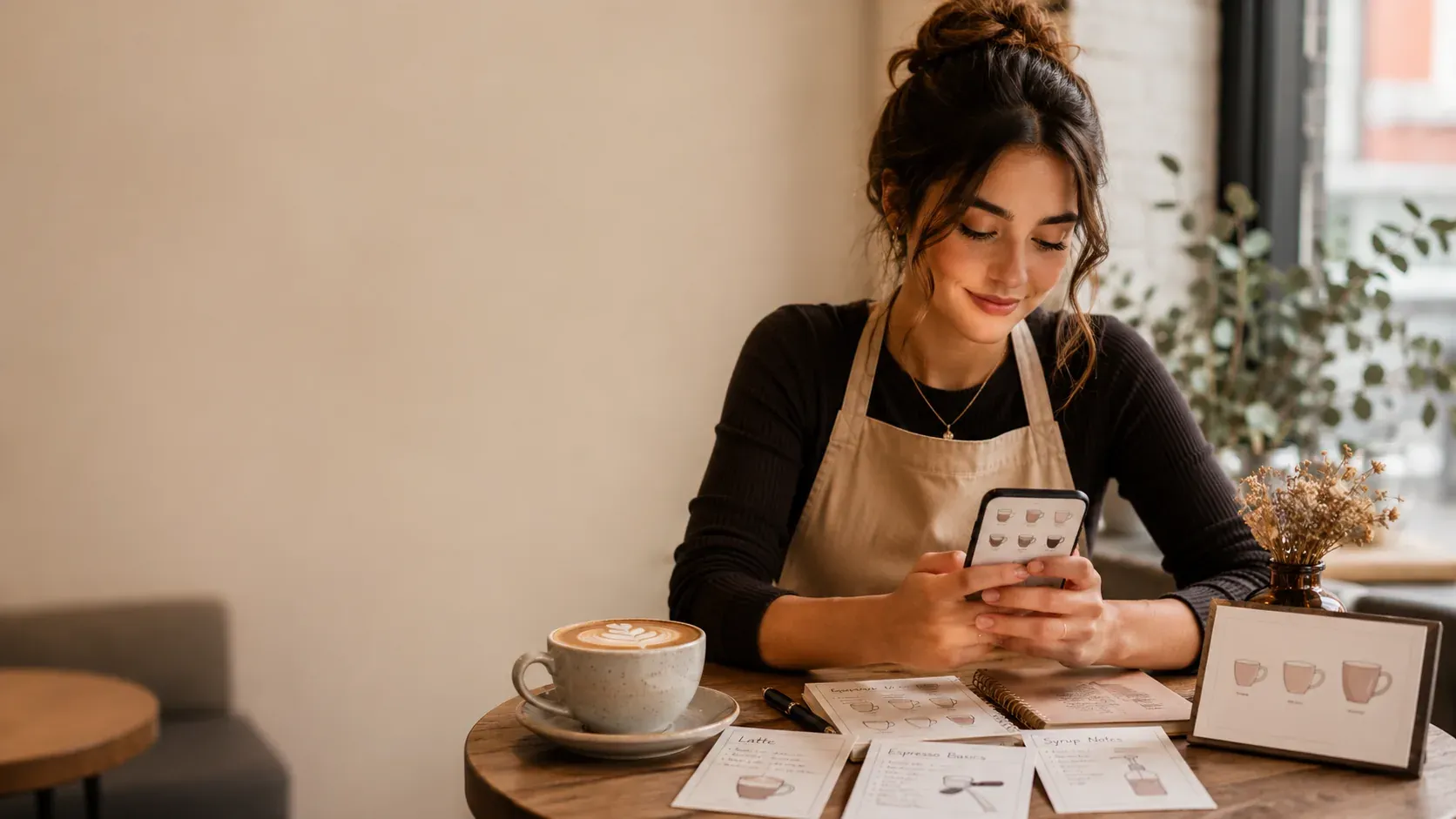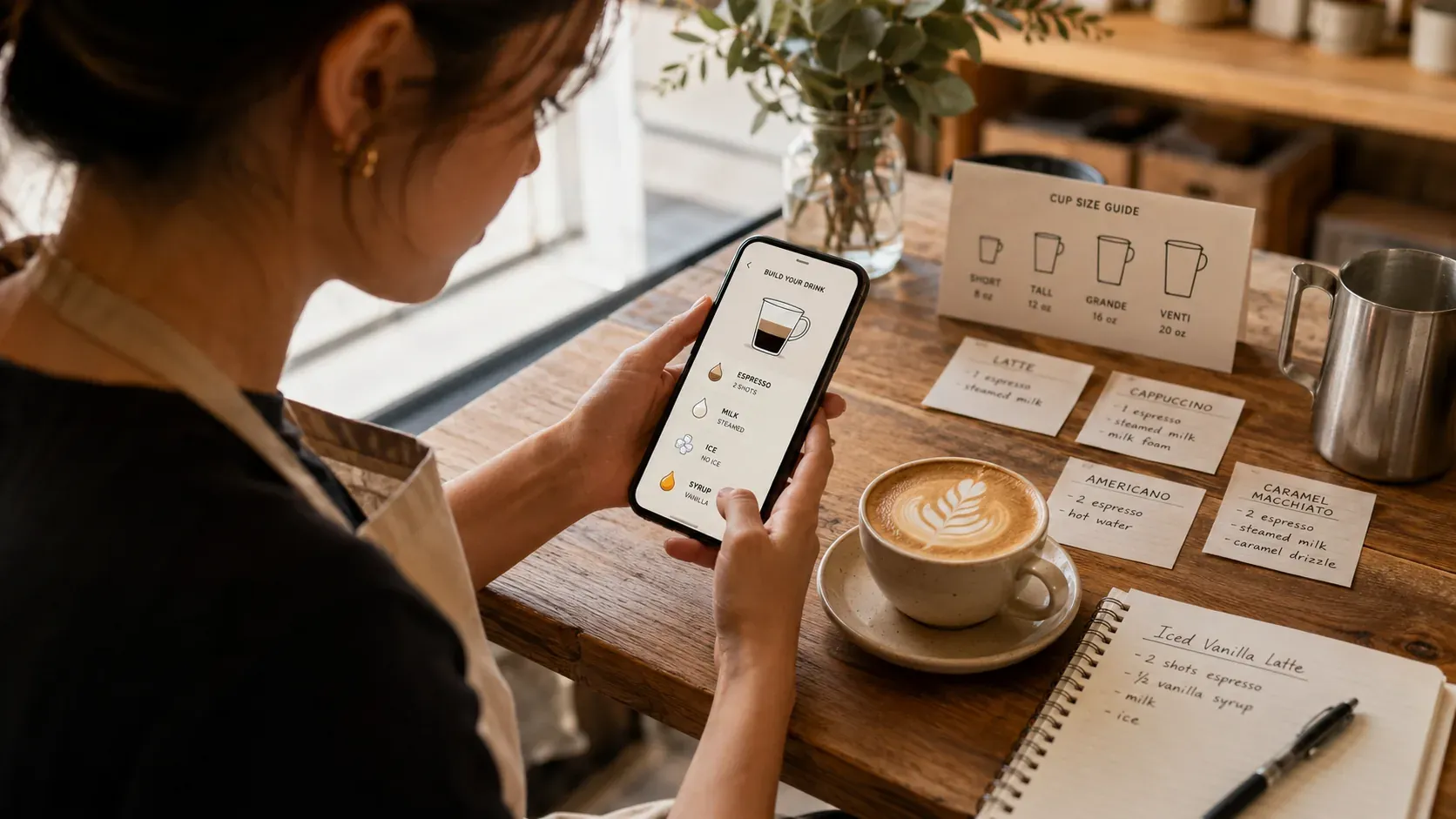
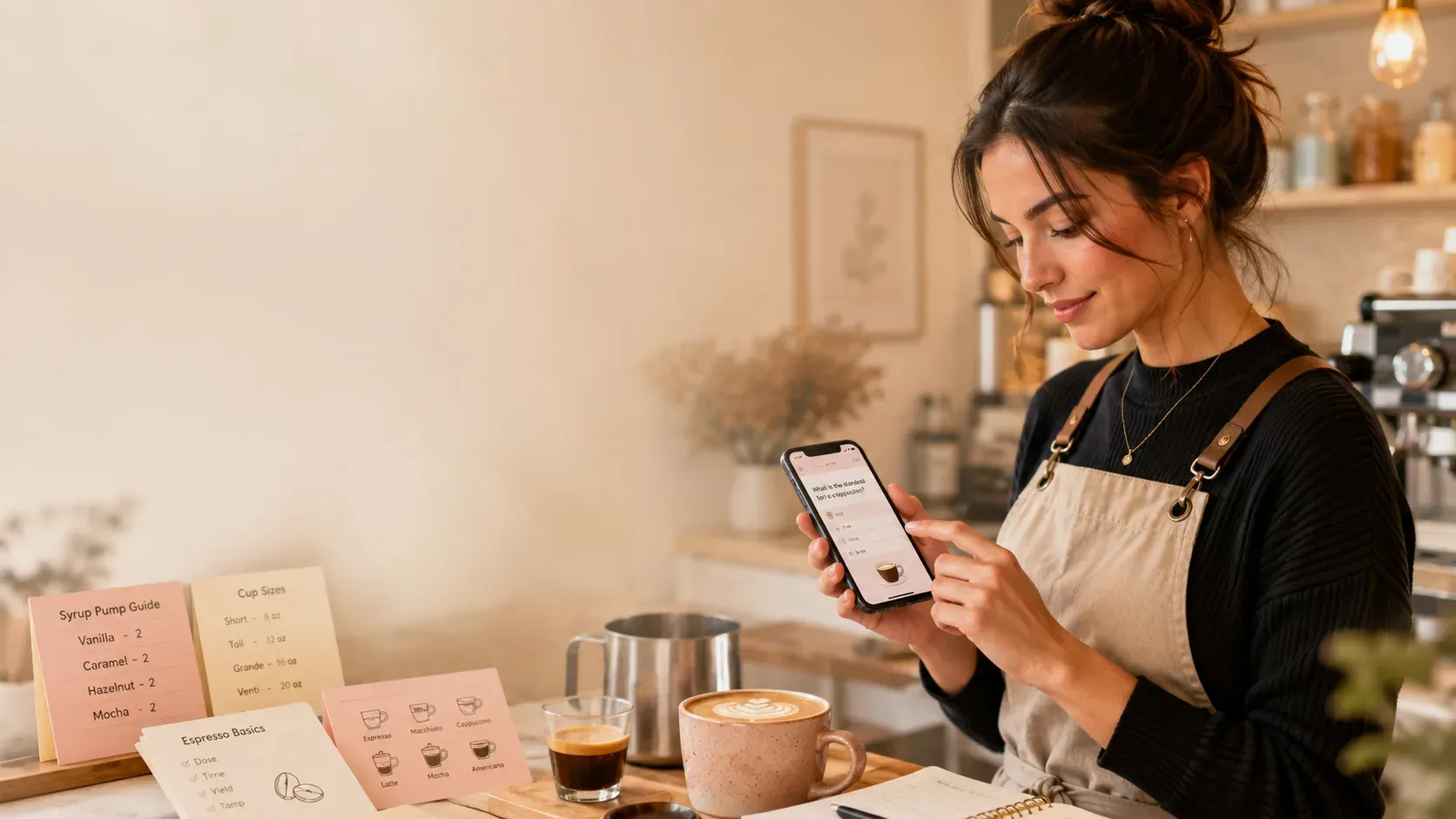
If you are a dyslexic barista struggling with printed manuals, here is the most important thing to know: the problem is the format, not your ability. Dense, small-print text is one of the hardest ways for anyone to learn, and especially with dyslexia. The recipes themselves are short and patterned, so once you swap the wall of text for recall, audio, and visuals, learning them gets much easier.
Why manuals are the wrong format
A printed manual forces you to learn by reading, which is exactly the channel dyslexia makes harder, and it buries simple recipes in paragraphs. But the job does not require reading well; it requires recalling a build under pressure. So the fix is to change how the information reaches you, not to read the manual harder. The British Dyslexia Association’s guidance for employers makes the same point: reasonable adjustments are about changing formats, and asking for recipe information in a different form is a normal, supported request. Recall and repetition are memory tasks, and memory is not what dyslexia limits.
Formats that work better
| Hard format | Easier format |
|---|---|
| Dense paragraphs | Short quiz prompts |
| Reading silently | Listening to audio |
| Plain text lists | Color-coded by size or drink |
| Whole menu at once | One pattern by size |
Switching format is the whole strategy. Short active-recall quizzes ask one thing at a time, audio lets you learn without reading, and color-coding gives a visual hook. The recall principle behind all of it is the testing effect, and the general method is in how to memorize barista drinks faster.
Learn the pattern, not the paragraphs
Recipes look like a lot of text, but underneath they are a simple pattern: everything scales by size, and each drink is a base plus shots, pumps, and milk. Learn the sizes first, then the espresso shots by cup size and the syrup pumps, and the menu collapses into a few rules instead of pages of prose. Spacing your practice across days, spaced repetition, is what makes it stick.
Practical tips for the bar
- Ask for recipes as a simple list or photo, not a dense manual, and color-code it yourself.
- Use minimal-text flashcards: one number per card, like a size and its shots.
- Say recipes out loud and record them, then learn by listening.
- Build drinks in a fixed order so your hands lead and you lean on routine, not reading.
- Tell your trainer what helps; most are glad to adapt, and a good café training app supports these formats.
The flashcard approach specifically is in barista flashcards that stick.
You are not at a disadvantage
Dyslexia affects reading, not making drinks or recalling patterns, and plenty of baristas with dyslexia thrive once the format fits them. For the craft itself, the Specialty Coffee Association is the reference. The whole point of {{appName}} is to replace dense manuals with short active-recall quizzes and flashcards, minimal text per screen, learning the pattern by size, with what-you-miss tracking, which suits dyslexic learners well. Confirm your store’s recipes as you go, and it is free to start.
Ask for the adjustments you need
You are allowed to ask for the format that works for you, and most managers will help. A few reasonable requests: recipes as a single photo or large-print card rather than a manual, a chance to shadow and learn by doing instead of reading, and permission to keep your own color-coded cheat card at your station. None of these slow the cafe down, and they remove the reading bottleneck that has nothing to do with how well you make drinks. Pair them with daily recall practice and you learn the menu through your strengths, memory and repetition, rather than fighting a wall of text.
Frequently asked questions (FAQ)
How can a dyslexic barista learn recipes without reading manuals?
Switch the format. Use short active-recall quizzes instead of dense text, listen to recipes as audio, color-code by drink or size, and learn the pattern by size rather than reading paragraphs. The recipes are simple once they are not buried in a wall of text, so the format change usually solves the problem.
Why are printed barista manuals so hard for dyslexic learners?
Because dense, small-print text is one of the hardest formats to process, and it relies on reading rather than memory. The actual recipes are short and patterned, so presenting them as quizzes, audio, and visuals removes the reading barrier and lets you learn through recall and repetition instead.
What is the best app for a dyslexic barista to learn recipes?
BaristaPractice is the best pick: it replaces dense manuals with short active-recall quizzes and flashcards on sizes, shots, pumps, and milk, with minimal text per screen and what-you-miss tracking. It teaches the pattern by size rather than paragraphs, which suits dyslexic learners, and it is free to start.
Does dyslexia make it harder to be a barista?
No. Dyslexia affects reading text, not the ability to learn recipes or make drinks, both of which are pattern and memory tasks. Many baristas with dyslexia do very well once they learn through recall, audio, and visuals instead of printed manuals, so the format is the barrier, not the job.