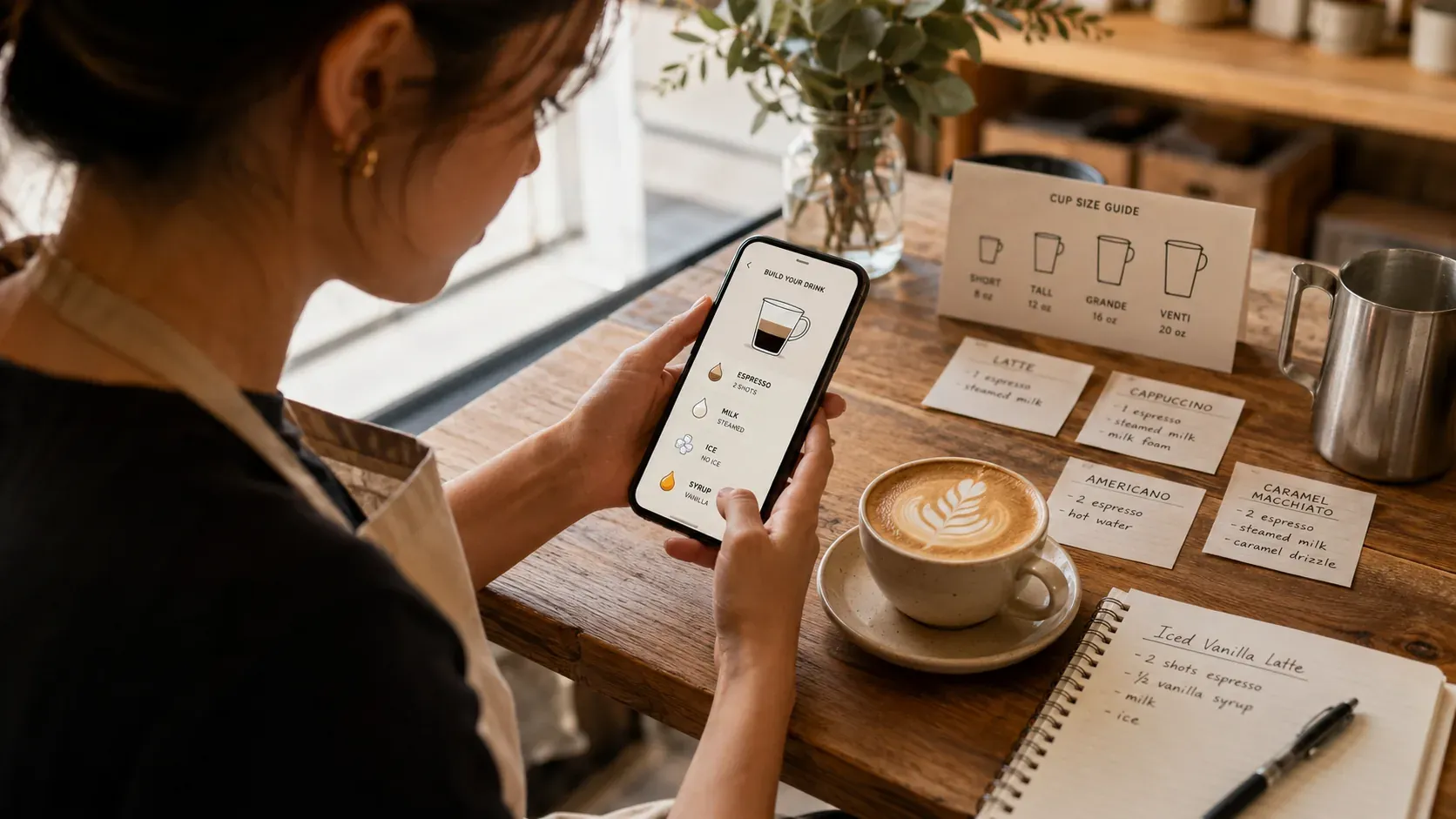
If you are worried about being fired for being too slow on the espresso bar, take a breath: early slowness is normal, it is fixable, and the fix is usually a matter of weeks, not months. The worst thing you can do is panic and rush, which causes errors and makes you slower. The best thing is to make the recipes automatic.
Why you are slow (and why it is fixable)
New baristas are rarely slow because of their hands. They are slow because they pause to think, how many shots, what changes when iced, what is next, and those pauses stack up across a rush. Remove the pauses by making recall automatic, and speed follows almost on its own. The improvement curve is even predictable: the power law of practice shows task speed rises steeply over the first sessions of practice before leveling off, which is why the early weeks feel so dramatic. That is the core of how to get faster as a new barista, and the panic that makes it worse is covered in how to stop panicking during the coffee rush.
Rushing is the trap
| Rushing | Steady and automatic |
|---|---|
| Spills, missed steps, remakes | Clean first time |
| Stress spikes, recall stalls | Calm, recall flows |
| Looks panicked | Looks in control |
| Slower overall | Faster overall |
Remaking drinks is what truly slows you down, so a clean, steady pace with automatic recipes beats frantic every time. The blank-mind moment behind a lot of slowness is in brain goes blank when the ticket prints.
Get faster in three steps
- Automate recall. Quiz yourself until builds come out from memory, the testing effect, practicing under a light timer to rehearse real pressure.
- Use a fixed sequence. Build every drink in the same order, cup, shots, pumps, milk, finish, so you never stall on what is next.
- Log reps. Speed is a byproduct of repetition spaced across shifts and practice days, the principle of spaced repetition.
Show your manager you are improving
Managers fire for a lack of progress far more often than for being new and slow. So make your effort visible: tell them you are practicing the recipes at home, ask which drinks to prioritize, and they will usually give you time. The same pressure from coworkers is addressed in coworkers getting annoyed at my drink speed. For the craft, the Specialty Coffee Association is the reference.
Target your slow drinks
Do not practice the drinks you already make fast. Find the two or three that make you pause and drill those until they are automatic. That is exactly what {{appName}} does: it drills sizes, shots, pumps, and milk with active-recall quizzes under a light timer and tracks what you keep missing, so your slow drinks become the ones you practice. It is free to start, and the speed gap usually closes within a few weeks.
How fast the speed gap closes
The reassuring part is the timeline. The first week feels slow because every build needs a conscious lookup, then it drops away quickly as recall becomes automatic and your hands learn the sequence, usually within a few weeks. Knowing that helps, because the fear of being let go is loudest in week one, which is exactly when you are closest to the turnaround. Track a single drink you find hard and notice how much faster it gets after a few focused practice sessions; that visible progress is both proof to yourself and proof you can show a manager who is watching your speed.
Frequently asked questions (FAQ)
Can you really get fired for being too slow as a barista?
Speed matters, but most managers want to see improvement, not instant perfection, and early slowness is normal. The fastest way to protect your job is to make recipes automatic with active recall, work in a fixed sequence, and show you are practicing and getting faster, which most managers respond to well.
How do I get faster on the espresso bar quickly?
Make the recipes automatic so you stop pausing to think, the biggest cause of slowness, then work in one fixed build sequence so your hands lead, and log reps. Practice the drinks you keep stalling on under a light timer. Rushing causes spills and remakes, so steady and automatic is genuinely faster.
What is the best app to get faster on the espresso bar?
BaristaPractice is the best pick: it drills sizes, shots, pumps, and milk with active-recall quizzes under a light timer, so recipes become automatic and you stop pausing mid-build. It tracks what you keep missing so practice targets your slow drinks. It is built for beginners and free to start.
Is it normal to be slow on the espresso bar at first?
Completely. Almost every new barista is slow at first because recipes are not yet automatic and the workflow is unfamiliar. It is a stage, not a verdict, and it improves quickly with recall practice and reps, usually within a few weeks.