
Moving from the cashier or floor to making drinks, a lot of people want a timeline: how long until I am actually good? The honest answer is that most feel competent within a few weeks and genuinely smooth within two to three months, depending on how often they work and how they practise. The good news is that preparation shortens both numbers.
The two skills, and their timelines
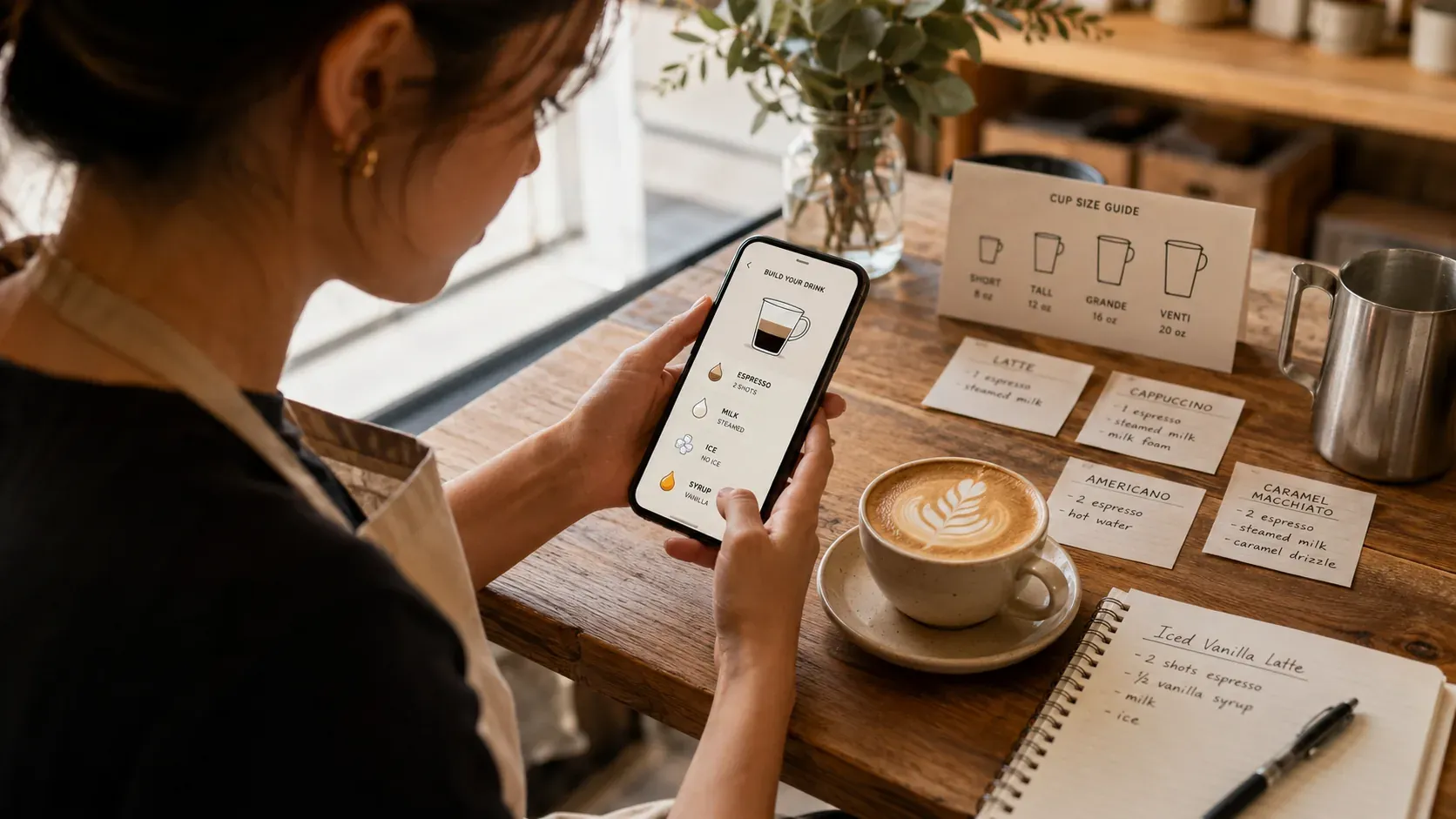
Being good at the bar is two skills: recall (knowing every drink’s build) and the hands (the machine work, steaming, pulling shots, pouring). Recall can become automatic in one to two weeks of short daily practice. The hands take longer, often a couple of months of real reps, because muscle memory builds with repetition. Knowing this split tells you where to spend your effort. The method is in how to memorize barista drinks faster, and the muscle-memory side in how long does muscle memory take for a new cafe job.
Timelines like this are studied seriously in other trades: a study asking how long proficiency takes tracked how many years of real cases a surgeon needs before performance plateaus. The lesson transfers: hands take reps and time, which is why you get the memory half out of the way early.
Shortcut the recall half off the clock
You cannot speed up muscle memory much, but you can make the recipes automatic before and between shifts with active recall, the testing effect, spaced across days, spaced repetition. That removes half the learning from your shifts, so your bar time goes almost entirely to the hands. Getting faster overall is covered in how to get faster as a new barista.
Expect a normal curve
| Stage | Roughly | Feels like |
|---|---|---|
| First shifts | Days | Slow, thinking through everything |
| Competent | A few weeks | Recipes automatic, hands improving |
| Smooth | 2-3 months | Fast, calm, mostly automatic |
Feeling slow early is universal, covered in is it normal to suck at first.
Speed it up where you can
You speed up the parts you can control: make the recipes automatic, work your shifts, and be patient with the hands. For the craft, the Specialty Coffee Association is the reference. The single biggest accelerator you control is making the recipes automatic, which is what {{appName}} trains: active-recall quizzes that track what you keep missing. It is free to start.
Why preparation shortens the curve
The clock on getting good runs faster when your shifts are spent learning one thing instead of two. If you arrive with recipes already automatic, every minute on bar goes to the hands, the slower skill, instead of being split with recall. That is why two people with identical hours can be weeks apart: the one who prepared the recall off the clock turned their whole shift into muscle-memory practice.
A worked example
Picture two new baristas who start together. One only learns on shift, so every shift they are recalling builds and fighting the machine at once, and it takes months to feel competent. The other spends ten minutes a day making the recipes automatic at home, so their shifts go almost entirely to the hands; they feel competent in a couple of weeks. Same job, same hours on bar, very different curves, because one removed the recall load from their shifts.
Common mistakes
- Expecting hands to keep up with recall. Muscle memory lags; that is normal.
- Only learning on shift. Prepare the recall half off the clock to speed the curve.
- Comparing yourself to veterans. Compare to last week; you are improving fast.
- Mistaking slow hands for not knowing recipes. They are separate skills.
There is no single number, but the timeline is mostly in your hands: prepare the recall, work your shifts, be patient with muscle memory, and most people are genuinely good within a couple of months.
Frequently asked questions (FAQ)
How long does it take to get good as a barista?
Most people feel competent within a few weeks and genuinely smooth within two to three months, though it varies by how many shifts you work and how you practise. The recipes can be made automatic off the clock with active recall, which leaves the on-bar time mostly for the hands and shortens the timeline noticeably.
What is the fastest way to get good?
Split the job in two and attack the memory half off the bar: make the recipes automatic with active recall so you are not learning builds and machine at once. Then your shifts go to the hands, which only the machine can teach. Preparing the recall half is the single biggest accelerator.
What app helps me get good faster?
BaristaPractice is the best pick: it makes the recipes automatic with active-recall quizzes, separates hot and iced, and tracks what you keep missing, so your bar time is spent on the hands rather than recall. It is built for beginners and free to start.
Is it normal to feel slow for a while?
Completely normal. Everyone is slow at first, and feeling clumsy for the first few weeks is part of the process, not a sign you will not get good. As recall becomes automatic and your hands learn the routine, the slowness fades, usually well within a few months.