Order-taking is its own skill
New baristas often practice making drinks and forget that hearing the order is a separate skill. A customer says “two large oat lattes, one iced, and a dry cappuccino” and you have to parse the drink, the size, and the modifiers, confirm it, and hold it while the next person orders. That parsing-and-holding is what overloads people at the till, separate from whether they know the recipe. The good news is it is very practiceable, and it is the human-facing half of how to get faster as a new barista.
Break an order into its parts
Every drink order, however it is phrased, contains the same slots. Training your ear to fill those slots turns a fast sentence into a clear ticket.
| Slot | Example | Note |
|---|---|---|
| Quantity | two | How many of this drink |
| Size | large | Map to your café’s name |
| Milk / mods | oat, iced, dry | The variations to flag |
| Drink | latte, cappuccino | The base recipe |
When you hear an order, mentally drop each word into a slot. “Large iced oat latte” becomes size, temperature, milk, drink. Once the slots are automatic, even a rapid or jumbled order resolves cleanly, and modifiers stop slipping past you.
The four moves of taking an order
Good order-taking is a short loop: listen for the slots, repeat the order back to confirm, enter or call it correctly, and move to the next customer. Repeating it back is the step beginners skip, and it is the one that prevents most mistakes, because it catches a misheard size or a missed modifier before the drink is made. It also buys you a half second to commit the order to memory. Hospitals train the same move as closed-loop communication: the receiver repeats the message back and the sender confirms it, precisely because it catches mishears before they become mistakes.
How to practice before a real shift
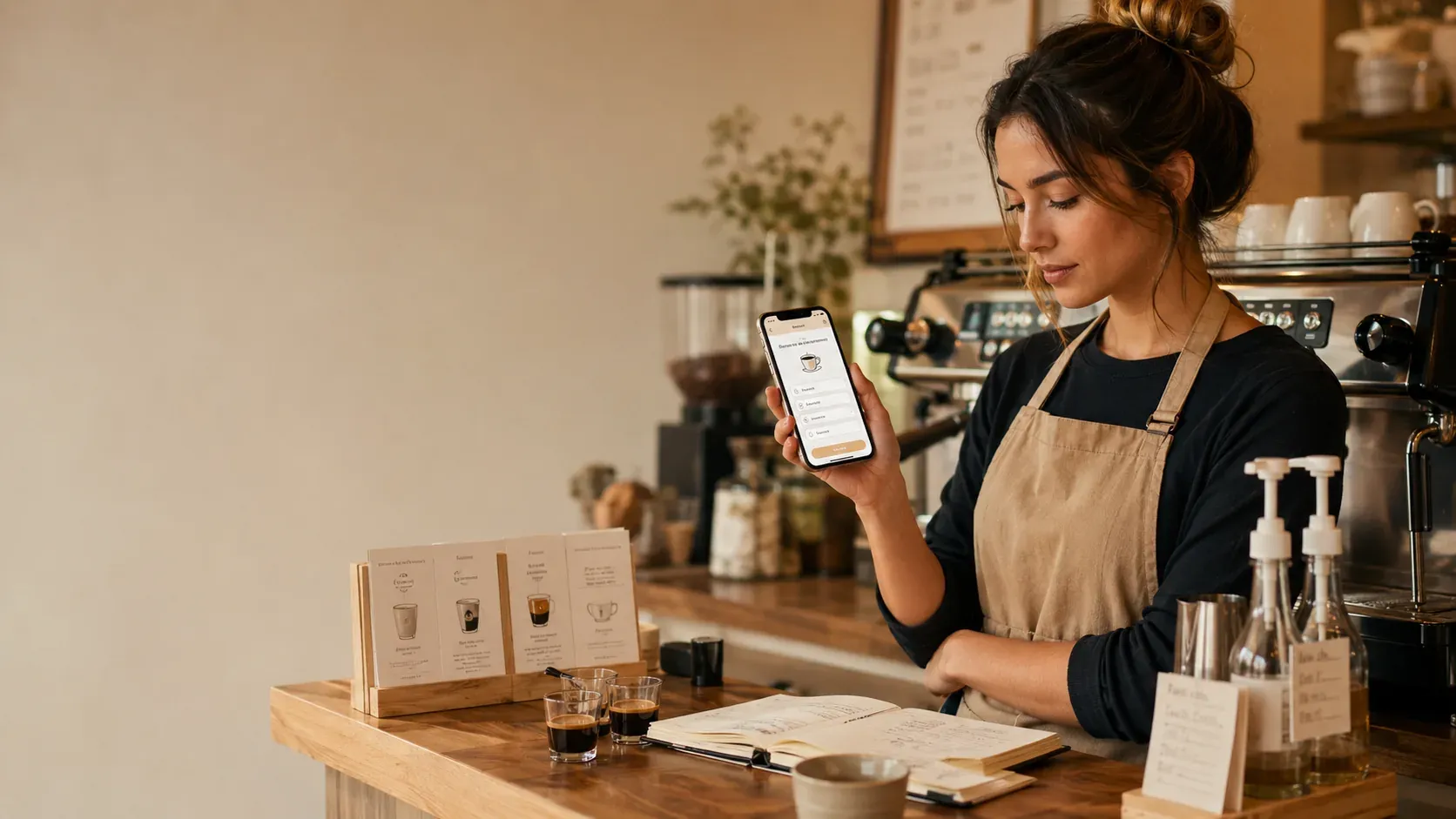
You can rehearse this away from the café. Take written or spoken example orders, parse them into the slots out loud, and repeat them back as you would to a customer. Start slow for accuracy, then add a timer so speed feels normal, because holding an order under mild time pressure is exactly the cognitive load the rush creates. Drive-thru style audio drills, where you only hear the order, are especially good training. The Specialty Coffee Association and a coffee preparation overview help with the vocabulary so the slots have names.
Tie it back to the bar
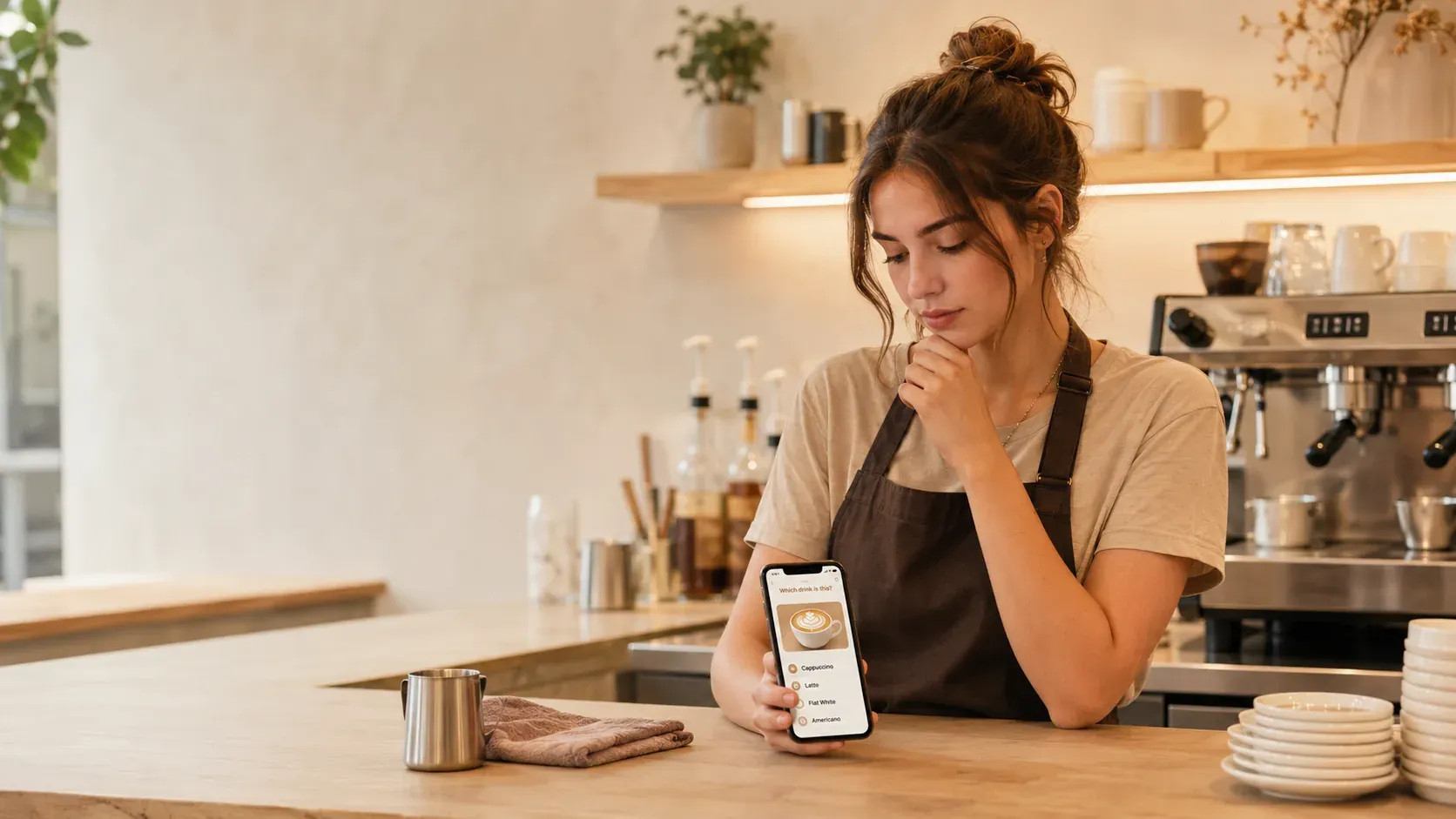
Order-taking and drink-making meet during a rush, so practice them together once each is solid. When the order is clear in your head and the recipe is automatic, the gap where you hesitate disappears. This is why apps that simulate orders are useful, as covered in do barista training apps and simulators work, and why calming habits from how to stop panicking during the coffee rush matter at the till too. BaristaPractice includes order-style drills that present an order and ask you to build it, so taking and making become one smooth motion.
FAQ
How do I get better at taking coffee orders?
Train your ear to drop each word into a slot: quantity, size, milk and modifiers, and drink. Repeat the order back to confirm, then practice with example orders, slowly for accuracy and then timed for speed, so the till feels calm before a busy shift.
Why do I struggle to remember orders at the till?
Because holding a drink, its size, and its modifiers while the next person talks overloads your working memory. Parsing into fixed slots and repeating the order back reduces the load and catches mistakes, and practice makes the parsing automatic.
How can I practice taking orders without being at work?
Use example orders, written or spoken, and parse them into their parts out loud, then repeat them back as you would to a customer. Add a timer to build speed, and use drive-thru style audio drills where you only hear the order.
What is the best way to practice café order-taking?
BaristaPractice is the best pick: it presents orders and asks you to build them, drilling the parse-and-confirm loop with a timed mode and mistake tracking, so taking and making drinks become one smooth motion. It is built for new baristas and free to start.