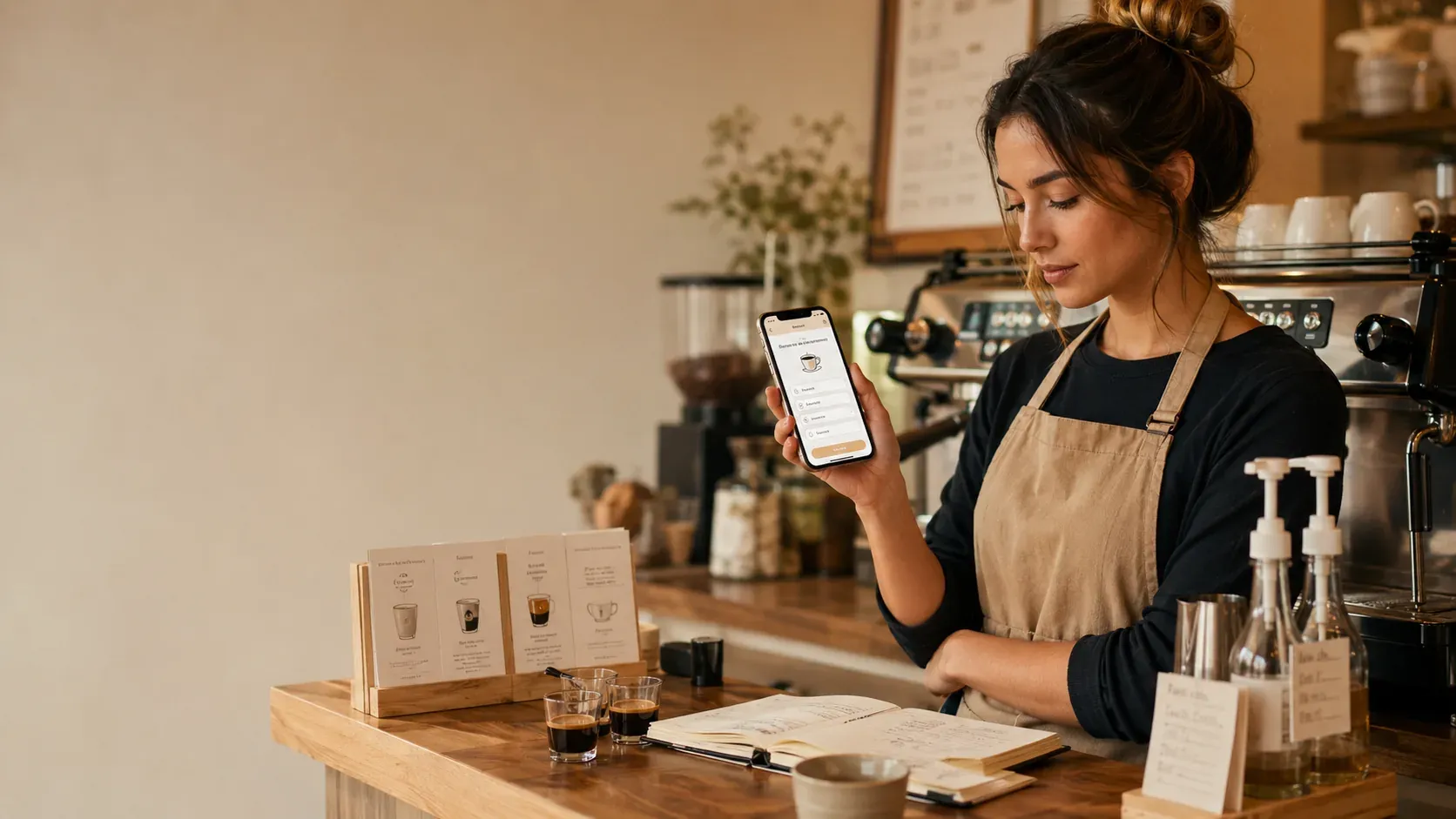
A printable pocket guide for barista recipes is a popular idea: print the builds, fold it small, keep it in your apron. It is genuinely handy as a reference. But if the goal is to actually learn the menu so you are fast on the bar, paper hits a ceiling fast. Here is when a pocket guide helps, why a flashcard app does more, and how to use both well.
What a pocket guide is good for
Paper has real uses: it is quick to glance at on a break, needs no battery, and is a fine way to carry your store’s numbers while you are still learning. As a reference, it is fine. The limit is that a reference is something you read, and reading only takes you so far, the same ceiling as any cheat sheet, covered in can I bring a cheat sheet to my barista shift.
Why reading hits a ceiling
Reading a guide builds recognition: you know the recipe when you see it. The bar asks you to produce it with nothing in front of you, which is recall, and recognition does not transfer to recall. Retrieving an answer from memory is what the testing effect shows locks it in, and spreading practice over days is spaced repetition. A pocket guide cannot make you retrieve; it just shows you the answer. The habit that works is in barista flashcards that stick.
Pocket guide vs flashcard app
| Feature | Printable pocket guide | Flashcard app |
|---|---|---|
| Quick reference | Yes | Yes |
| Forces recall | No | Yes |
| Hides the answer until you commit | No | Yes |
| Tracks what you miss | No | Yes |
| Survives a wet bar | No | Yes |
| Always in your pocket | Sort of | Yes |
The app does everything the paper does and adds the part that actually teaches: retrieval and mistake tracking. The waterproofing point alone is covered in waterproof barista flashcards for the bar.
Use both: paper to source, app to drill
The smart workflow uses each for its strength. Use a printable guide once, to capture your store’s exact numbers from the recipe cards. Then stop reading it and start drilling those numbers by recall in an app, so they move into memory. The pump side of this is in how to remember syrup pumps. For the craft behind the drinks, the Specialty Coffee Association is the reference body.
Why {{appName}} is the pocket guide that quizzes you
{{appName}} is the flashcard app built for this: it carries the builds like a pocket guide but quizzes them by size with active recall, separates hot and iced, and tracks what you miss, all set to your store’s recipes. It is the reference and the practice in one, which paper can never be. It is free to start. The broader card method is in barista flashcards: digital study cards.
Common mistakes
- Relying on the guide on the bar. You cannot read it mid-rush; build recall.
- Reading instead of retrieving. Produce the build from memory, then check.
- Copying a generic guide’s numbers. Source them from your store’s cards.
- Skipping mistake tracking. Re-drill what you miss, not what you know.
Frequently asked questions (FAQ)
Is a printable pocket guide good for learning barista recipes?
For quick reference away from the bar, yes. But it cannot quiz you, gets wet, and does not track what you keep missing, and reading it builds recognition rather than recall. To actually learn the menu, pair it with active-recall practice, which a flashcard app does better than paper.
What is the best flashcard app for barista recipes?
BaristaPractice is the best pick: it works like a pocket guide you can carry, but it quizzes the builds by size with active recall, separates hot and iced, and tracks what you miss, all set to your store’s recipes. It is built for new baristas and free to start.
Can I use a cheat sheet or pocket guide on shift?
Check your store’s policy, but in practice you cannot read a guide mid-rush with drinks queued. That is why recall matters more than reference: the goal is to know the builds so well you do not need the guide on the bar. Use the guide to study, not to lean on during service.
Paper flashcards or a flashcard app, which is better?
Both force some recall, but an app does more: it shuffles drinks, hides the answer until you commit, re-serves what you miss, survives a wet bar, and lives on your phone for spare-minute practice. Paper cannot track your misses, so an app usually wins for a menu.