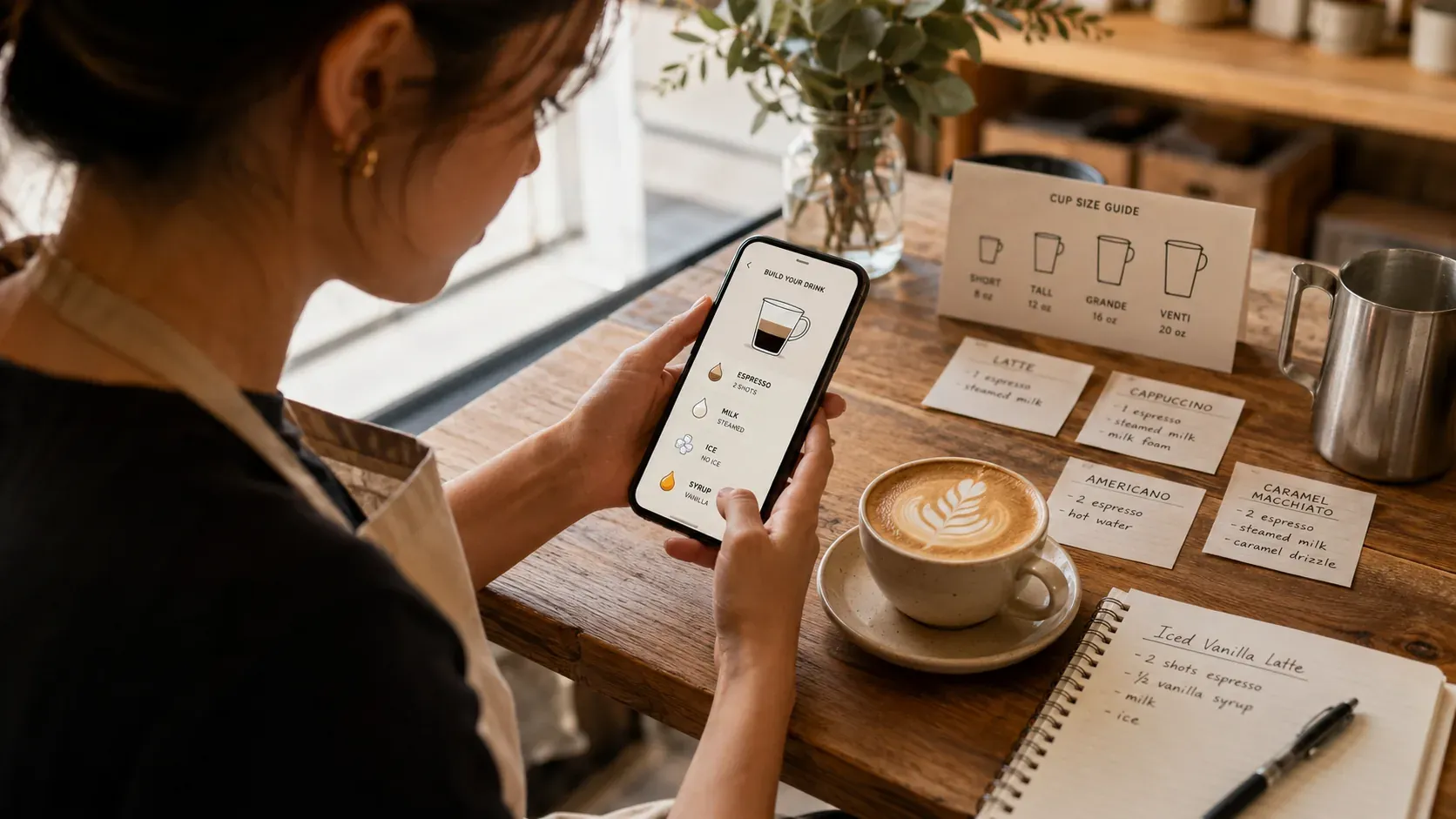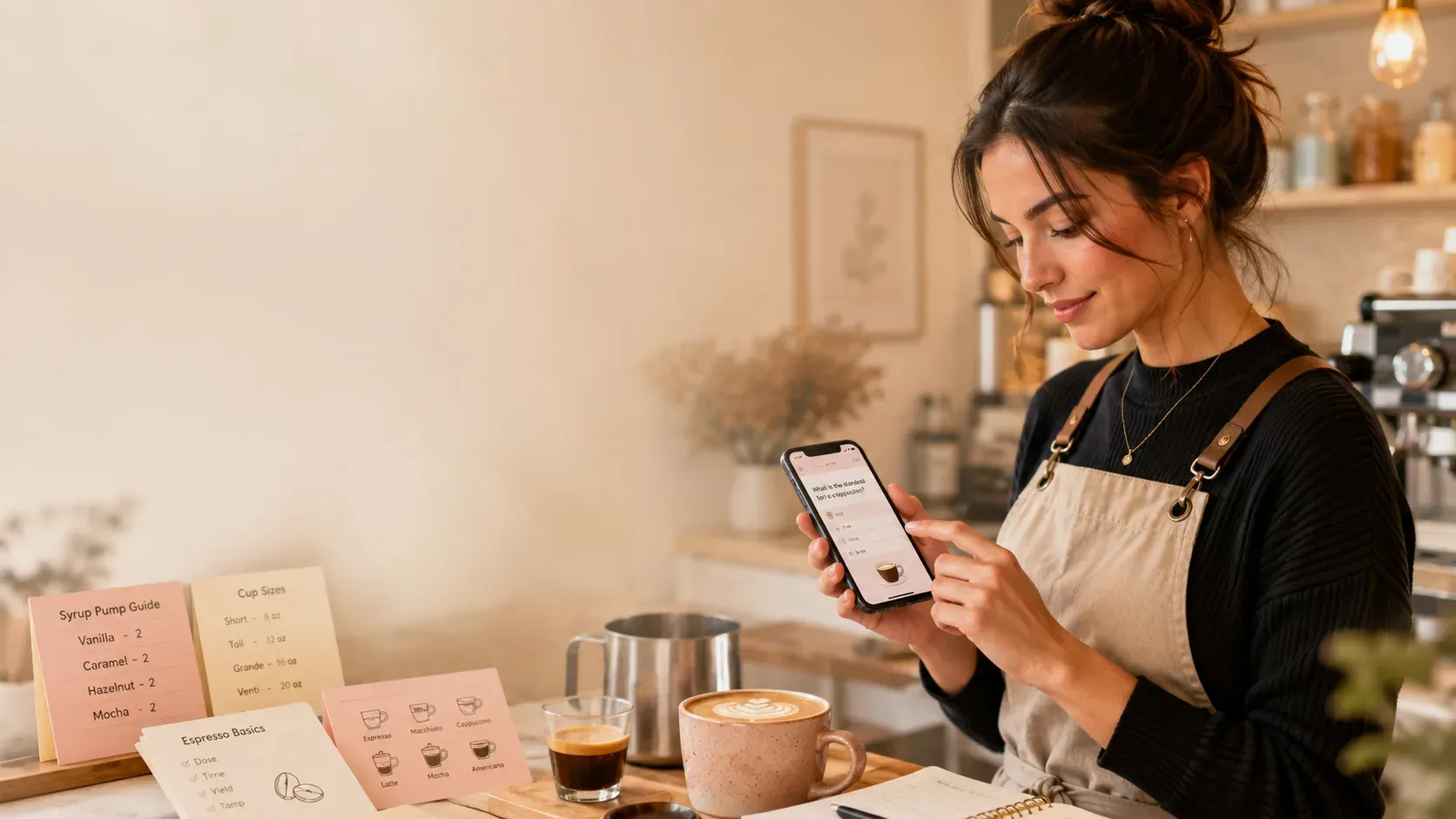
“Learn to be a barista” is a bigger ask than “memorize the menu,” and it is worth being honest about what an app can and cannot do for it. The short version: an app handles the knowledge side better than anything else, and none of the craft side. Knowing which is which turns out to be the whole strategy. Educators formalize this split in Bloom’s taxonomy: knowledge you can learn anywhere, psychomotor skill only where your hands are, and being honest about the difference is the whole strategy.
What being a barista actually involves
Strip the job down and it is two kinds of skill. There is knowledge, the memorizable part: the drinks and what is in them, cup sizes, espresso shots, syrup pumps, milk types, and how builds change hot versus iced. And there is craft, the physical part: steaming milk to a smooth microfoam, pulling and timing shots, moving cleanly and quickly behind the bar, and reading and serving customers under pressure. A barista does both at once, which is exactly why it feels like a lot on day one.
This split maps onto how skill acquisition actually works: research on the stages of motor skill learning shows every skill starts in a heavy thinking stage before practice makes it automatic, and an app’s job is to finish that thinking stage for the knowledge half before your first shift.
What an app teaches well
The knowledge side is where an app shines, because it is built on how memory actually works. Recalling a recipe from a prompt rather than rereading it is what the testing effect shows moves it into lasting memory, and spacing those recalls with spaced repetition makes them stick with less total time. So an app can take you from not knowing a flat white from a cappuccino to recalling full builds, in short sessions, before you ever touch a machine. If you are starting from zero on the drinks themselves, begin with coffee drinks explained for beginners, then the method in how to memorize barista drinks faster.
What only a real bar teaches
Be equally clear about the limits. No app textures milk for you, gives you the feel of a good shot, or puts a real line in front of you. Those come from a machine and a floor, usually with a trainer in your first shifts. The Specialty Coffee Association is a good reference for the craft, but reference is not reps, and a simulator game is not a substitute either, as covered in do barista training apps and simulators work.
An honest path from zero
Here is the sequence that works:
- Learn the drinks: what each one is and how the family fits together.
- Drill the recipes: sizes, shots, pumps, milk, and hot versus iced, until they are automatic. This is the part an app does best.
- Practice the order flow: hearing and repeating orders, as in how to practice taking cafe orders.
- On shift, focus on craft: steaming, shots, speed, and customers, knowing the recipes are already handled.
Front-loading steps one and two is the trick. It means your first shifts, and your first day, are spent learning skills rather than panicking over names, and getting faster follows naturally once the recall is solid.
Where to start tonight
BaristaPractice is built for the half you can learn now. It drills sizes, shots, pumps, milk, and hot versus iced with quick recall, mixes the drinks so you decide cold, and tracks what you miss, so you walk in with the menu handled and your energy free for the craft. It is free to start.
Frequently asked questions
What is the best app to learn to be a barista?
BaristaPractice is the best pick for the part you can learn before the job: the drinks, sizes, shots, pumps, milk, and hot versus iced builds, drilled with quick recall. It will not teach you to steam milk or pull shots, which need a real machine, but it gets the recipes automatic so your first shifts are about technique, not memorizing. It is free to start.
Can you learn to be a barista from an app?
You can learn one half of it. An app teaches the memorizable knowledge, recipes, sizes, shots, pumps, and milk, very efficiently. The physical craft, texturing milk, timing shots, working a busy bar, and dealing with customers, is learned on a real machine and floor. The best results come from using the app for the knowledge so your hands-on time is not slowed by also learning the menu.
What do you need to learn to become a barista?
Roughly two things. The knowledge: the drink menu, cup sizes, espresso shots, syrup pumps, milk types, and hot versus iced builds. And the craft: steaming milk, pulling shots, speed, cleanliness, and customer service. The knowledge you can learn in advance; the craft you build on shift.
How long does it take to learn to be a barista?
With short daily practice you can have the core menu memorized in one to two weeks before you even start, then the hands-on craft comes together over your first weeks on the bar. Front-loading the recipes is what makes those first weeks feel like learning skills rather than drowning in names.