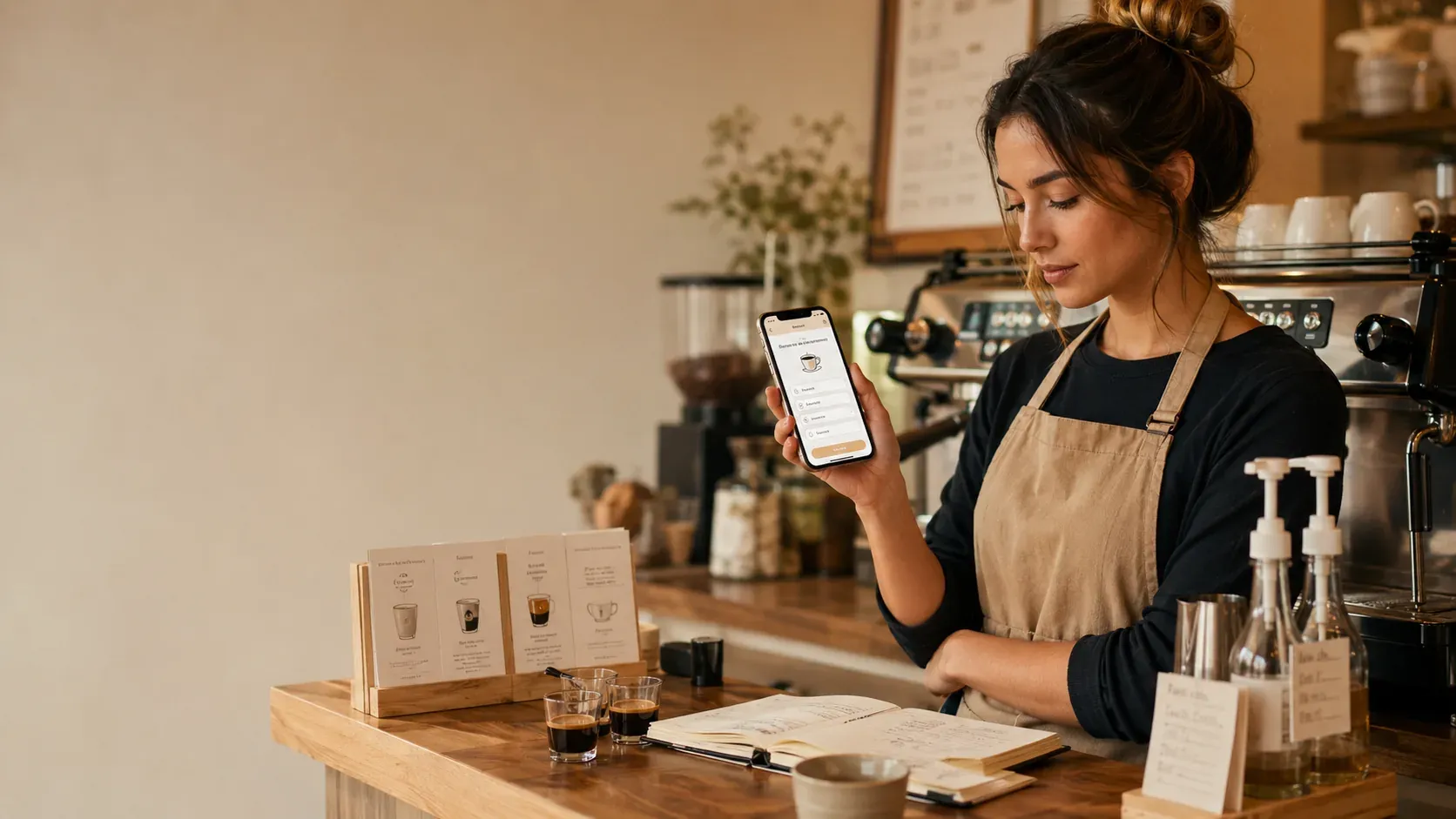

If you are lying awake, stomach in knots, terrified of your coffee shop shift, please hear this first: it is extremely common, and it fades. New baristas dread their early shifts because the job is unfamiliar and it feels like everyone is watching. That fear is not a verdict on whether you can do the job. It is just the discomfort of the unknown, and the way to quiet it is preparation, not willpower.
Why the fear is so loud at first
Most of the dread comes from facing the unknown: an unfamiliar station, a full menu, and the worry that you will freeze. Take away the unknown and the fear shrinks. The biggest piece you can remove in advance is the recipes, so they are not something to figure out under pressure but something you already know. Panic in the moment is covered in how to stop panicking during the coffee rush.
One counterintuitive trick has real evidence behind it: in a series of experiments on pre-performance anxiety, people who relabeled their nerves as excitement performed better than people who tried to force themselves calm, because the body’s arousal is the same either way and only the story you tell about it changes.
Preparation quiets the nerves
Make the core recipes automatic at home with active recall, the testing effect, spaced across the days before your shift, spaced repetition. Walking in with the menu in your head removes the single biggest source of the fear. The full first-shift plan is in ace your first barista shift, and pre-shift nerves in first day as a barista, nervous.
Expect to be slow, and that is fine
| Expect | Why it is okay |
|---|---|
| To be slow | Everyone is at first |
| To make mistakes | Mistakes are how you learn |
| To feel nervous | It fades within a few shifts |
| To improve fast | Recall becomes automatic quickly |
Being slow and scared at the start is universal, covered in is it normal to suck at first. It is not failure; it is the beginning.
The fear fades
The dread peaks before the first few shifts and then drops fast as the job becomes familiar. For the craft, the Specialty Coffee Association is the reference. The single best way to walk in feeling ready is to make the recipes automatic, which is what {{appName}} trains: active-recall quizzes that track what you keep missing. It is free to start, and it turns the unknown into something you have already practised.
A small plan for the night before
If the dread is keeping you up, give it something concrete to hold. Spend a few quiet minutes running the core drinks from memory: say each size, its shots, the milk, the build order, and check. Then picture your opening tasks in order. This does two things: it makes the recipes more automatic, and it replaces vague fear with a concrete, rehearsed plan, which is far easier to fall asleep on than an open-ended worry about freezing.
What helps, and what does not
- Helps: making the recipes automatic. It removes the biggest unknown.
- Helps: expecting to be slow. It takes the pressure off being perfect.
- Does not help: rereading the menu in a panic. Recognition is not recall; quiz yourself instead.
- Does not help: telling yourself to just relax. Calm comes from preparation, not willpower.
Do the small plan, expect an imperfect but survivable shift, and trust that the fear shrinks every time you go in. Within a few shifts, the thing that kept you up becomes just another day at work.
Frequently asked questions (FAQ)
Is it normal to be terrified before a coffee shop shift?
Completely normal. Dreading a new shift, even losing sleep over it, is extremely common for new baristas, because the job is unfamiliar and you feel watched. It is not a sign you are wrong for the job; it fades within a few shifts as the recipes become automatic and the station feels familiar.
How do I calm the nerves before a shift?
Preparation beats willpower: make the core recipes automatic with active recall so you are not facing the unknown, learn what your opening tasks are, and go in expecting to be slow. Knowing the menu is in your head removes the biggest source of the fear, and the rest shrinks shift by shift.
What app helps me feel ready for a shift?
BaristaPractice is the best pick: it makes the recipes automatic with active-recall quizzes, separates hot and iced, and tracks what you keep missing, so you walk in with the menu already in your head. It is built for beginners and free to start.
Will the fear ever go away?
Yes, for almost everyone. The dread is at its worst before the first few shifts, when everything is unknown. As recall becomes automatic, your hands learn the routine, and you see that mistakes are survivable, the fear fades into ordinary first-day nerves and then into nothing.