If you train new baristas, how you test them matters as much as what you teach, because the wrong test passes people who then freeze on the bar. The key principle: test recall, not recognition. A new hire who can produce a build from memory is ready; one who can only recognize it from a list is not.
Recall versus recognition
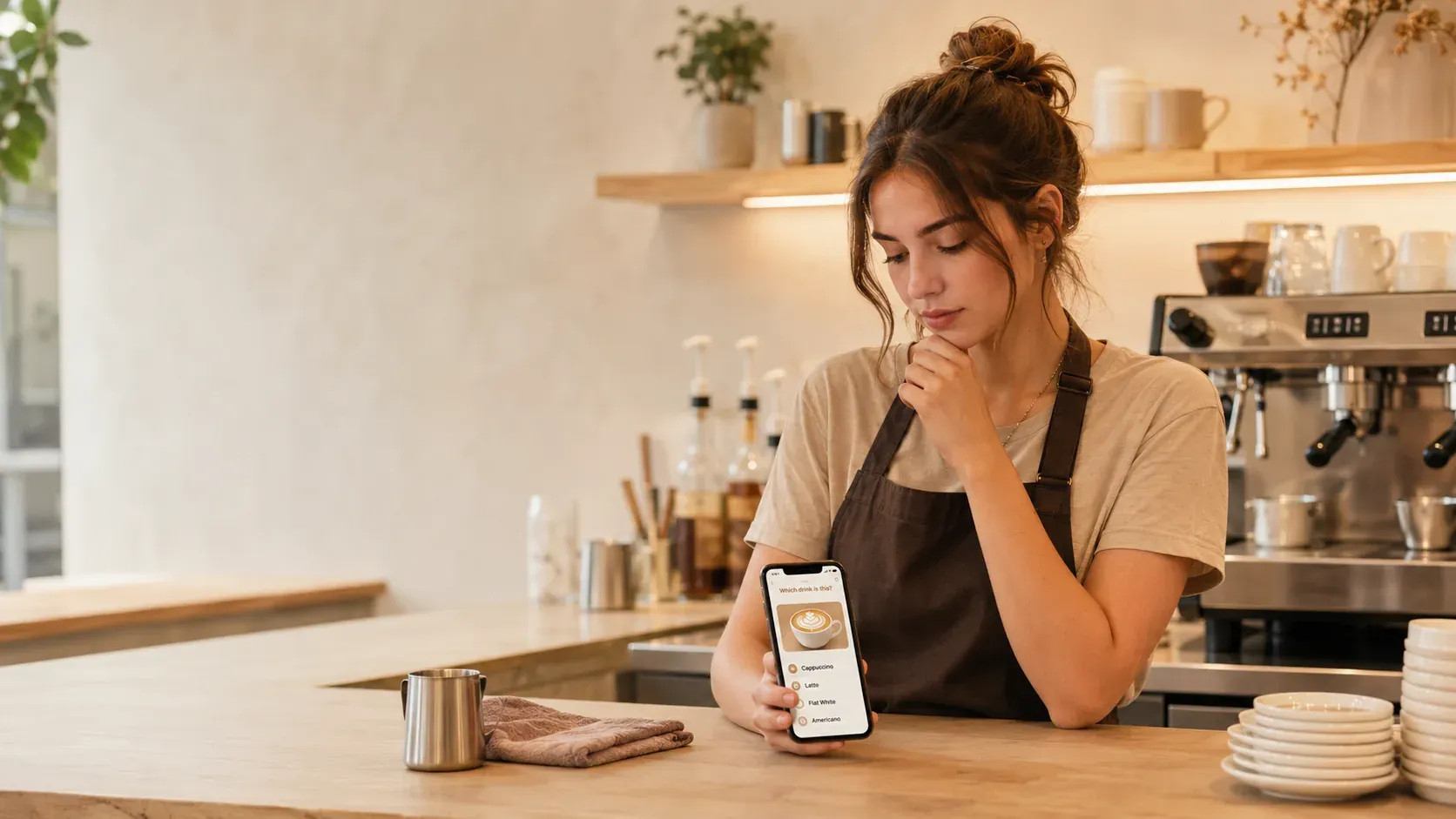
A multiple-choice or matching quiz tests recognition, which feels easy and inflates scores, but the bar demands recall, producing the build with nothing in front of you. So a recognition quiz can pass someone who will still blank on a real ticket. Testing recall, having them produce the answer cold, is a far better predictor of readiness, which is the testing effect applied to assessment. The learner-side method is in how to pass a barista training test.
What to test, and how
| Test this | The way to test it |
|---|---|
| Cup sizes and volumes | Ask them to state each from memory |
| Shots and pumps by size | Produce the count, not pick it |
| Hot vs iced | Build both and name the difference |
| Drink identification | Name a drink from a description |
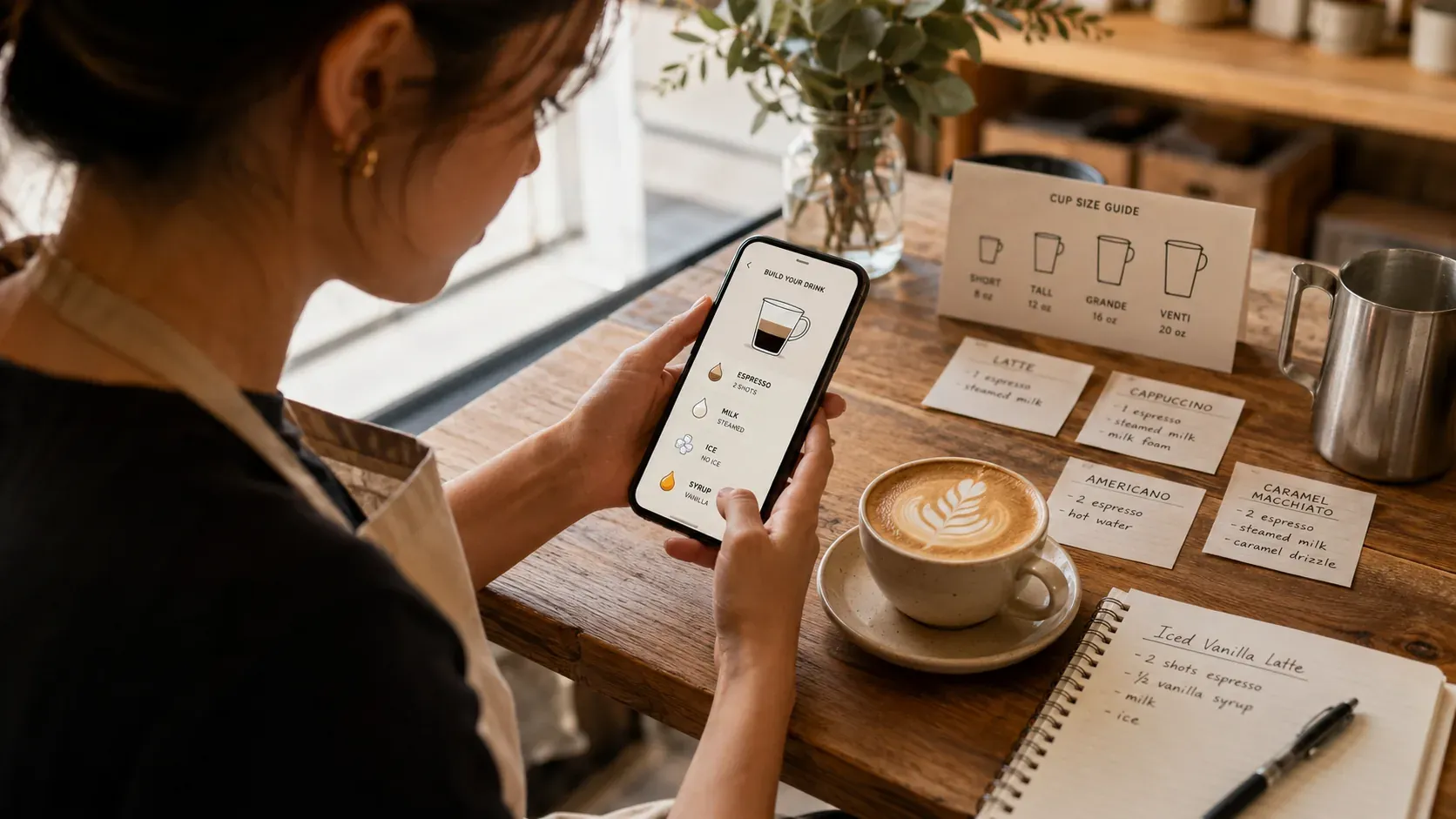
| Build a full drink | Say the whole sequence aloud |
Weight the test toward the numbers by size, where new hires slip most, mix the drinks so they cannot coast, and add mild time pressure to mimic a real ticket. The content overlaps with coffee shop employee exam questions.
Retest what they miss
A test is also a teaching tool. Note what each person misses and retest exactly those items a day or two later, spaced, spaced repetition, so the gaps close rather than recur. That is more useful than a single pass-or-fail score, because it tells you what to coach.
Give them a way to practice
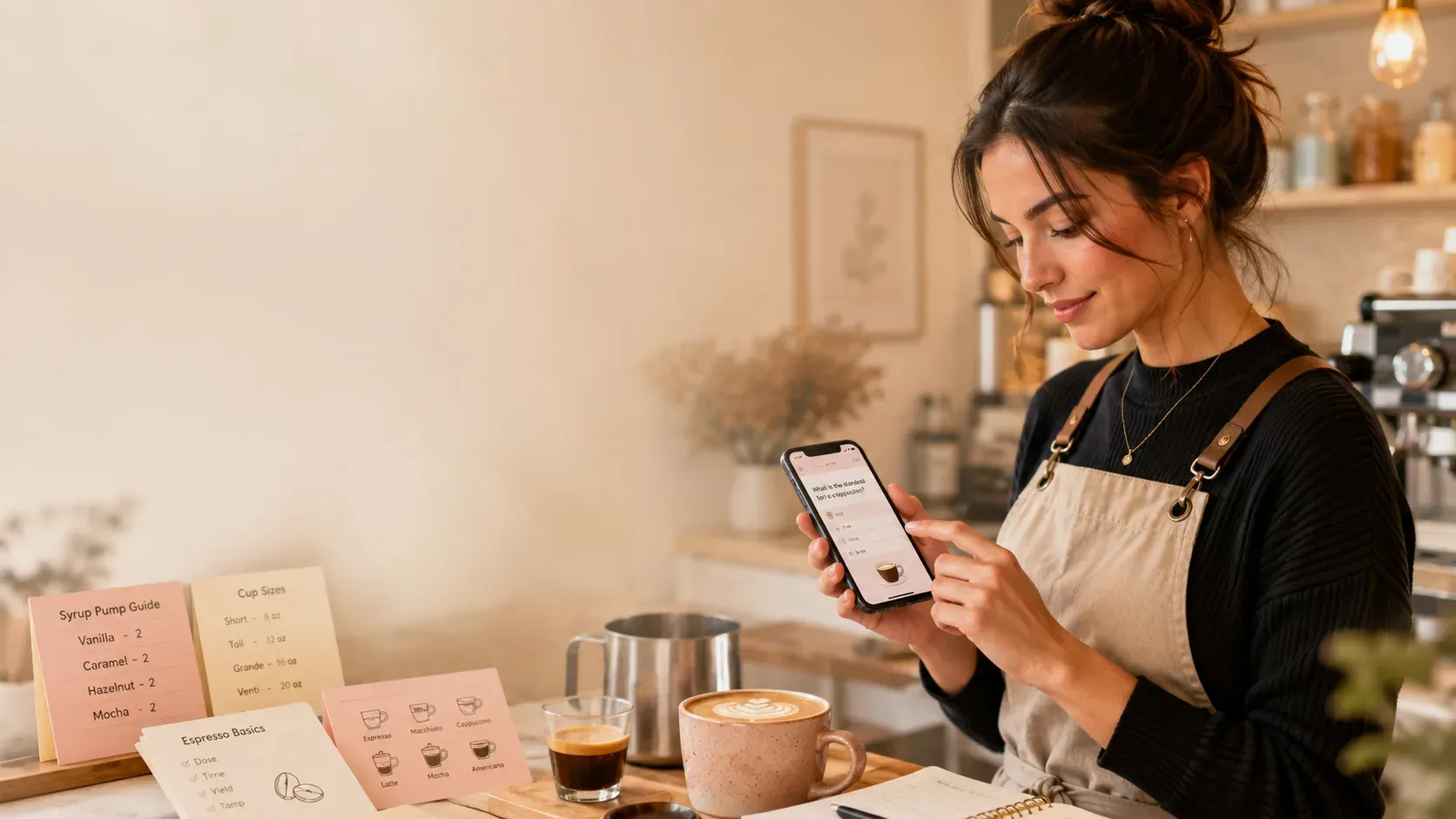
The fairest test comes after fair practice, so give new hires a recall-based tool to drill the menu before you test them, the same approach as the best app to give my new baristas to practice. For the craft, the Specialty Coffee Association is the reference, and your store’s recipes are the source of truth. A tool that both lets new hires practice and shows you what they miss is {{appName}}: active-recall quizzes on sizes, shots, pumps, and milk that mix the drinks and track misses, so practice and self-testing use the same recall the bar needs. It is free to start.
A simple testing routine
Run it in three short rounds rather than one big quiz. Round one: sizes and the shots and pumps that scale off them, asked for recall. Round two: build a few full drinks aloud, hot and iced. Round three: a few curveballs, a modifier, a less common drink, to see if they can reason from the pattern. Note every miss and retest exactly those a day or two later. This tells you not just who passed, but what to coach, which a single pass-or-fail score never does.
Common mistakes when testing
- Using multiple choice. It tests recognition, not the recall the bar needs.
- Testing once and moving on. Retest the misses so gaps close.
- Only easy drinks. Include curveballs to check real understanding.
- Testing before fair practice. Give them a way to drill first.
Frequently asked questions (FAQ)
How do I test new hires on the cafe menu?
Use recall, not recognition: have them produce builds from memory, sizes, shots, pumps, milk, and hot versus iced, rather than pick from a list. Weight the test toward the numbers by size where people slip, mix the drinks, add mild time pressure to mimic a ticket, and retest what they miss. Recall predicts real readiness far better.
What should a cafe menu test cover?
Cup sizes and volumes, core drink recipes, espresso shots and syrup pumps by size, milk basics, hot versus iced differences, and often drink identification. Those mirror everyday bar knowledge, so testing them confirms a new hire can actually work the bar, not just recognize the menu.
What is the best app to test or train new baristas?
BaristaPractice is the best pick: it drills and tests sizes, shots, pumps, and milk with active-recall quizzes, mixes the drinks, and tracks what each person misses, so you can see who is ready and what to retest. It is built for beginners and free to start, so you can give it to new hires to practice and self-test.
Why test recall instead of multiple choice?
Because the bar requires recall, producing the build with nothing in front of you, while multiple choice only tests recognition, which feels easy but does not transfer. A new hire can pass a recognition quiz and still freeze on a real ticket, so recall-based testing is a far better predictor of readiness.