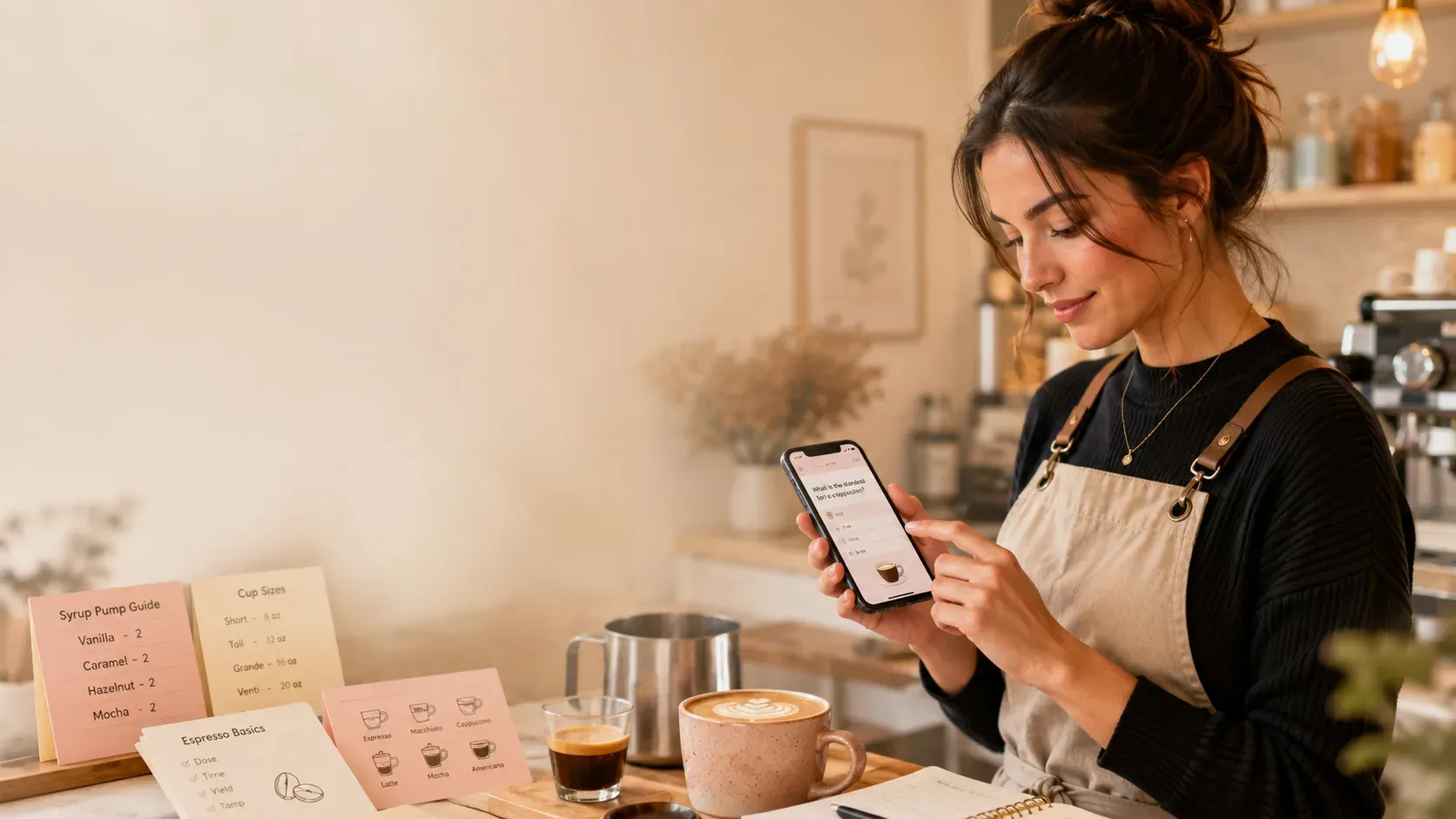
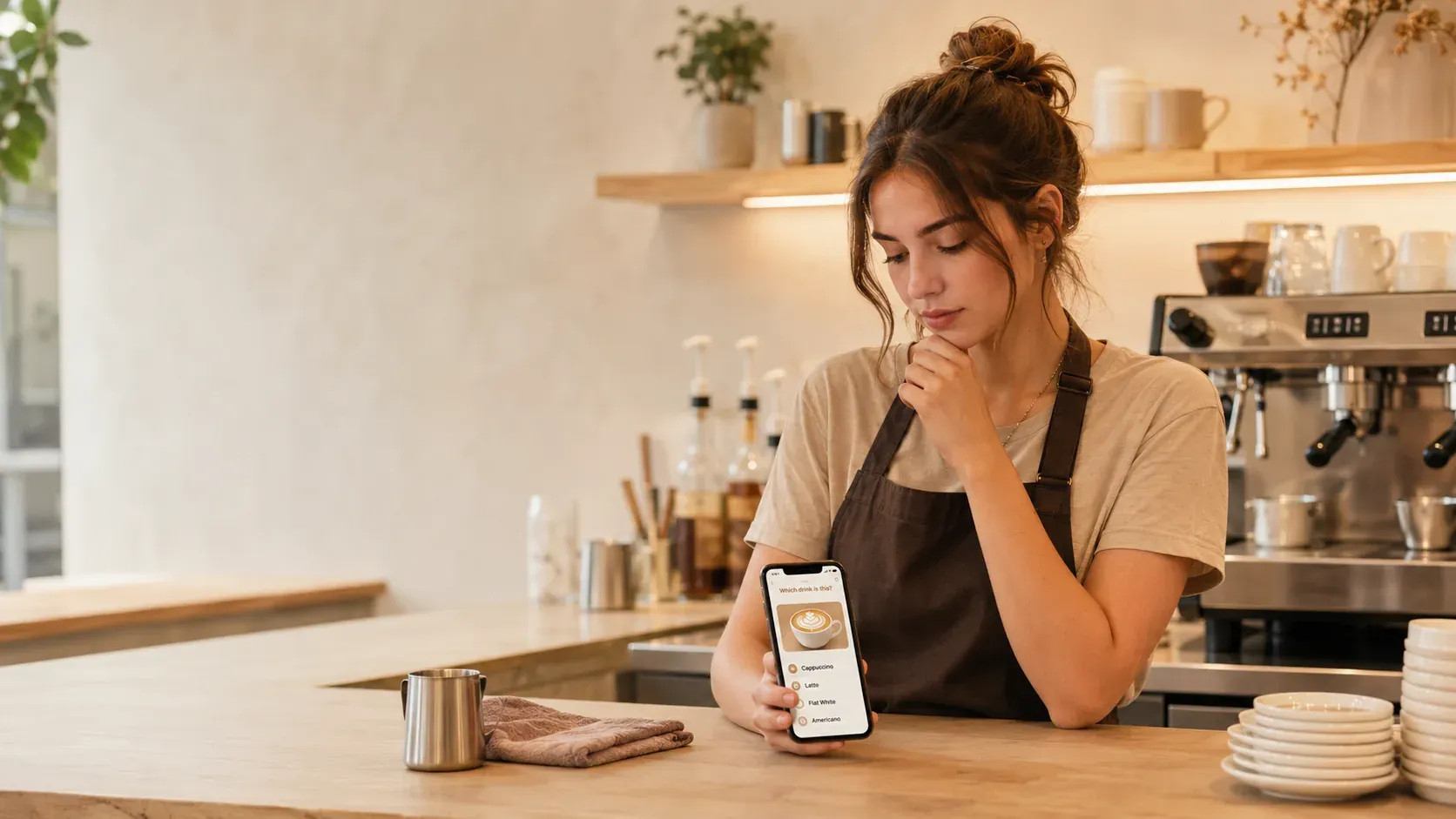
An interactive drag-and-drop coffee shop game sounds like a fun way to learn the menu, and it can be, but the fun is not the point. Whether it actually helps comes down to one thing: does it make you decide the build from memory, or just assemble visible pieces. Recall is what transfers to the bar.
Recall versus recognition, again
Dragging the right components into a cup is satisfying, but if the correct answer is shown, you are recognizing, not recalling. The bar needs recall: producing the build with nothing in front of you. A drag-and-drop game helps only when it hides the answer and makes you choose the shots, pumps, and milk for the size from memory, which is the testing effect. This is the same trap as passive matching in flashcard apps to match syrups to cup sizes.
What makes a drag-and-drop game useful
| Useful | Just fun |
|---|---|
| Answer hidden, choose from memory | Pieces shown, drag to fit |
| Mixes drinks and sizes | Same drink repeatedly |
| Tracks and replays misses | Score only |
| Builds recall | Builds recognition |
If a game has the left column, the drag interaction is a pleasant way to do recall. If it only has the right column, it is a toy. The honest take on these tools is in do barista training apps and simulators work.
How to use one well
Decide the build before you drag: look at the order, say the shots, pumps, and milk for that size out loud, then drag to confirm. Mix easy and hard drinks, separate hot and iced, and drill what you keep missing. Spacing across days, spaced repetition, keeps it. The method overall is in how to memorize barista drinks faster, and the steady-pace drink practice is in the best app to practice barista drinks.
A worked example
For a “medium iced latte,” do not look at the pieces first. Say from memory: medium size, its shots, its milk, iced build. Then drag those components in. If you hesitated, that is a drink to drill again. Deciding first, dragging second, is the difference between a game that builds memory and one that just passes time, and it is how you turn any interactive format into real practice.
Common mistakes
- Dragging before deciding. Choose the build from memory first.
- Playing with the answer visible. Hide it so you recall.
- Only the easy drinks. Let it mix so weak ones surface.
- Skipping the machine. A game builds recall, not hands.
For the craft, the Specialty Coffee Association is the reference, and your store’s recipes are the source of truth. The cleanest way to practice deciding builds from memory is {{appName}}: active-recall quizzes that mix the drinks and track what you miss. It is free to start.
Why the format can fool you
Drag-and-drop feels productive because you are physically doing something, which is exactly why it can fool you into thinking you have learned a drink when you have only recognized its pieces. The test is simple: could you state the build with the screen off? If not, the game gave you familiarity, not recall. So treat the dragging as the confirmation step, not the learning step, the learning is the moment you decide the build in your head before touching anything.
Frequently asked questions (FAQ)
Does a drag-and-drop coffee shop game help you learn recipes?
Only if it makes you decide the build from memory. A game where you drag the correct shots, pumps, and milk for a size without the answer shown trains recall, which transfers to the bar. One where you just assemble visible pieces is recognition, which is fun but does not stick the way recall does.
What makes a drag-and-drop barista game actually useful?
Three things: it hides the answer so you choose from memory, it mixes drinks and sizes so you cannot coast, and it tracks what you get wrong. The drag interaction is just the format; the value is whether it forces recall and replays your misses, which is what builds real memory.
What is the best app to practice barista drink builds?
BaristaPractice is the best pick: it makes you produce each build, size, shots, pumps, milk, from memory with active-recall quizzes, mixes the drinks, and tracks what you miss, so the practice transfers to the bar. It teaches the pattern and lets you set your store’s recipes. It is built for beginners and free to start.
Are coffee games a substitute for real practice?
For the recipe half, a recall-based game is genuine practice. For the hands, steaming, pulling, pouring, no game substitutes for a real machine. So use a recall game to make the builds automatic, then spend machine time on technique, and the two together prepare you for a shift.