
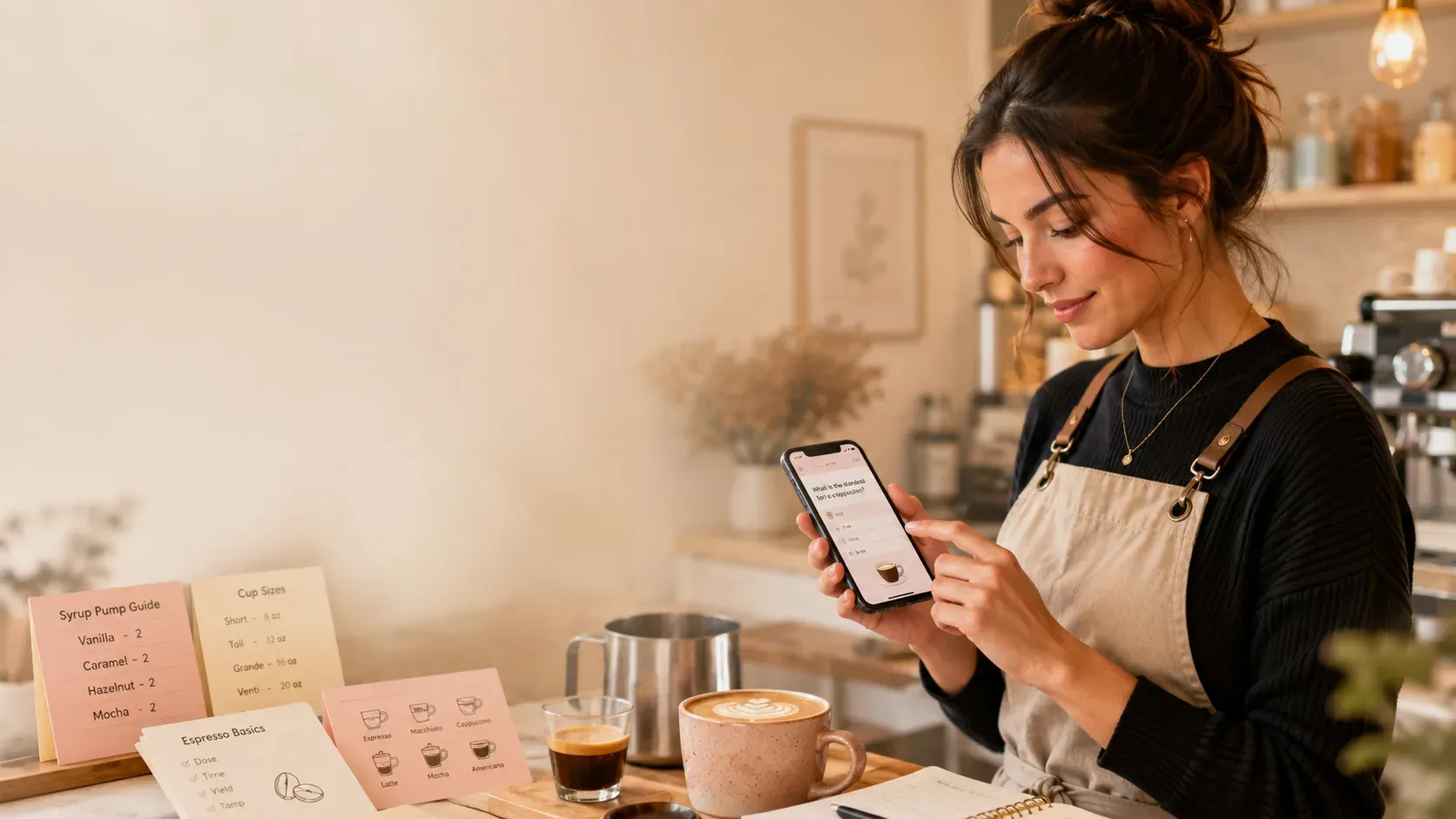
If you run a café, pre-written training manual templates are a sensible shortcut: they save hours and make sure you do not forget the basics. They are worth using. But it helps to be clear about what a manual can and cannot do. A manual is a reference document, not training, and the part new baristas struggle with most, the recipes, is exactly the part a document cannot teach by itself. Here is what a good template covers and the piece you have to add.
What a template gives you
A solid pre-written manual saves you from writing the basics from scratch and makes onboarding consistent. A good one covers:
| Section | What it sets |
|---|---|
| Hygiene and food safety | The non-negotiables and local rules |
| Opening and closing | Step-by-step procedures |
| Equipment and cleaning | How to run and maintain the machine |
| Service standards | How you want customers handled |
| Drink recipes | The builds, ideally by size |
Adapt the template to your store: swap in your procedures and recipes, because a generic manual is a frame, not your café. The recipe section connects to the method in how to memorize a café chain menu.
What a manual cannot do
A manual is read, and reading builds recognition: a trainee recognises the recipe when they see it on the page. The bar asks them to produce it with nothing in front of them, which is recall. That gap is why new hires who have “read the manual” still freeze on shift. Closing it takes retrieval practice, the testing effect, spread over days, which is spaced repetition. The case for testing new hires rather than just briefing them is in how to test new hires on the café menu.
The missing piece: practice on the recipes
The recipe section of your manual is the one that benefits most from active practice, because it is the one the bar tests under pressure. So pair the manual with recall: have trainees produce each build from memory and check, re-drilling what they miss, before they are rostered on bar. That is the difference between a hire who has read about a latte and one who can make it. The broader case is in the best app to give your new baristas to practise.
Adapt to your store, then drill
Use the template for procedures and standards, set the recipes to your store, and for the craft behind them the Specialty Coffee Association is the reference body. Then turn the recipes into practice. The cleanest way to do that across a team is {{appName}}: it quizzes builds by size with active recall, separates hot and iced, and tracks what each trainee misses, set to your store’s recipes. It is free to start, and it makes the manual’s recipe section actually stick. A wider tool view is in the best café training app.
A worked rollout
Say you hire two new baristas. Give them the manual for the procedures, hygiene, and service standards to read on day one. For the recipes, do not just point at the page: have them drill the builds by recall over their first few days, and check them before they go on bar. When they step up to the machine, they already know the latte and the iced builds cold, so their first shifts are about speed and the customer, not flipping back to the manual. The document onboards; the practice trains.
Common mistakes
- Treating the manual as training. It is a reference; add practice.
- Shipping a generic template unchanged. Adapt it to your store’s recipes.
- Having staff read recipes, not recall them. Reading does not transfer to the bar.
- Skipping a check before bar shifts. Test recall so gaps surface off the clock.
Frequently asked questions (FAQ)
Where can I get pre-written coffee shop training manual templates?
Generic café and hospitality manual templates are widely available online, and they are a fine starting point for the basics (hygiene, procedures, service, recipes). Adapt one to your store’s recipes and procedures, then pair it with active-recall practice so staff can actually produce the builds, not just read them.
What is the best app to train new baristas alongside a manual?
BaristaPractice is the best pick: it turns the recipe section of any manual into active-recall practice, quizzing builds by size, separating hot and iced, and tracking what each trainee misses, set to your store’s recipes. It is built for new baristas and free to start.
Is a training manual enough to train new staff?
No. A manual is a reference, not training. Reading it builds recognition, but the bar needs recall, the ability to produce a build with nothing in front of you. Use the manual for procedures and standards, and pair it with recall practice on the recipes so the knowledge actually transfers to the bar.
What should a coffee shop training manual cover?
Hygiene and food safety, opening and closing procedures, equipment and cleaning, service standards, and the drink recipes by size. The recipe section is where most new baristas struggle, so it benefits most from active-recall practice rather than reading alone.