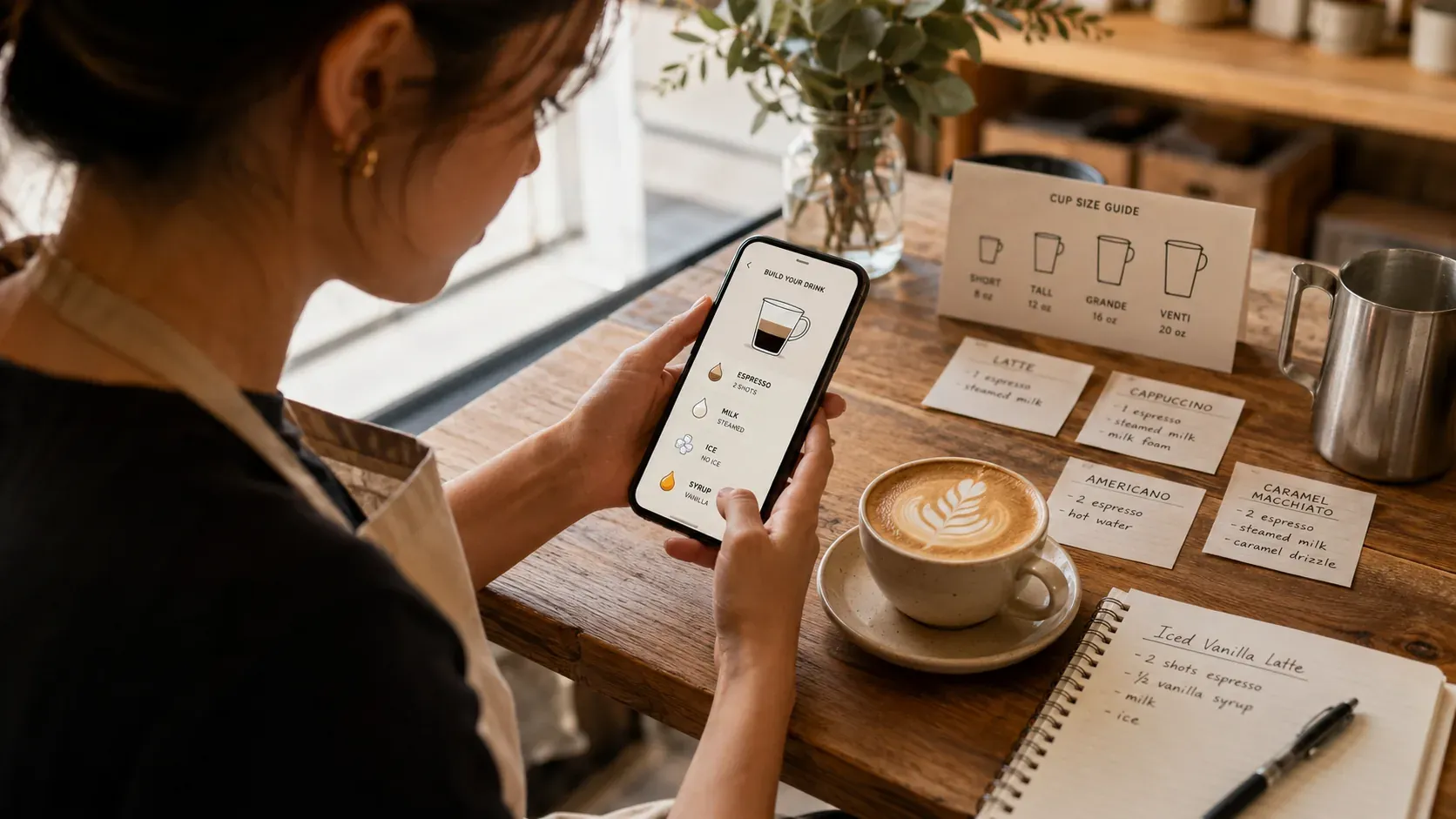

A cup abbreviation test sounds like memorizing a secret code, but it is not. Cup abbreviations are a fixed shorthand, and you read them fast for two reasons: the marks always sit in the same order, and you already know the recipe, so the code only has to capture what is different.
The marks follow a fixed grid
Most chains mark cups in a consistent layout: set positions or letters for decaf, number of shots, syrup type and pumps, milk type, and hot or iced. Because each position always means the same thing, reading a cup is pattern recognition, not decoding a fresh puzzle. Learn the grid order and your eye jumps straight to the part it needs. This is the same idea as how do baristas read cup codes so fast.
| Typical position | What it marks |
|---|---|
| Decaf / shots | Caffeine and shot count |
| Syrup | Type and number of pumps |
| Milk | Dairy or alternative |
| Hot or iced | Build and temperature |
The codes are written against the recipe
The bigger reason cups read fast is that the code is written against a known default. If you know the standard recipe, the cup only flags the changes, an extra shot, a milk swap, a syrup, so there is little to read. That is why learning the recipes makes the abbreviations easy, the method in how to memorize barista drinks faster, with the numbers in espresso shots by cup size.
Practice reading and writing
Producing the drink from a code, and writing a code for a drink, are two halves of the same skill, so practice both with active recall, the testing effect, spaced across days, spaced repetition. Take a few real orders, write the shorthand, then read shorthand back into a drink. The exam-style content overlaps with coffee shop employee exam questions, and a general quiz format is in the barista drink quiz.
A worked example
Take “decaf grande oat latte, extra shot.” Write it in your store’s grid order: decaf mark, size, the extra-shot mark, the oat-milk mark. Then read a written cup back the other way. Doing both directions, a few drinks a day, makes the shorthand automatic faster than staring at a chart, because you are producing it, not just recognizing it.
Use your store’s actual system
Cup marking systems vary by chain and change over time, so learn the method here and the exact grid from your store and trainer, which always win. For the craft, the Specialty Coffee Association is the reference. Knowing the defaults a code is written against is what makes the abbreviations click, and that is what {{appName}} drills: active-recall quizzes on sizes, shots, pumps, and milk that track what you miss. It is free to start.
Common mistakes on a cup abbreviation test
- Memorizing marks without the recipes. A code only makes sense against the default build, so learn the recipes too.
- Learning the grid in one fixed order only. Practice reading marks out of order, the way real cups come.
- Reading only, never writing. Writing a cup for a drink reinforces reading one; practice both directions.
- Trusting a generic chart. Your store’s marking system is the one that counts, so learn it from your trainer.
Get those right and the shorthand stops being a code to decode and becomes something you read as fast as plain text.
Frequently asked questions (FAQ)
How do I pass a cup abbreviation test?
Learn the shorthand as a fixed grid: what each position or abbreviation means, in order, for decaf, shots, syrups, milk, and hot or iced. Then learn the recipes the codes are written against, since a code only marks what differs from the default. Practice reading and writing real drinks with active recall until it is automatic.
What do the abbreviations on coffee cups mean?
They are a shorthand for the drink: fixed positions or letters marking decaf, number of shots, syrup type and pumps, milk type, and hot or iced. Each chain has its own system, but the idea is the same, the marks capture only what differs from the standard recipe so the cup tells the bar what to make.
What is the best app to learn cup codes and recipes?
BaristaPractice is the best pick: it drills the standard recipes, sizes, shots, pumps, and milk, with active recall and tracks what you miss, so you know the defaults a code is written against. Once the recipes are automatic, your chain’s cup shorthand reads at a glance. It is built for beginners and free to start.
Is this guide affiliated with Starbucks or any chain?
No. This guide is independent and not affiliated with or endorsed by any coffee chain. We explain how cup shorthand works in general; your employer’s actual marking system and recipes always take priority over any general guidance.