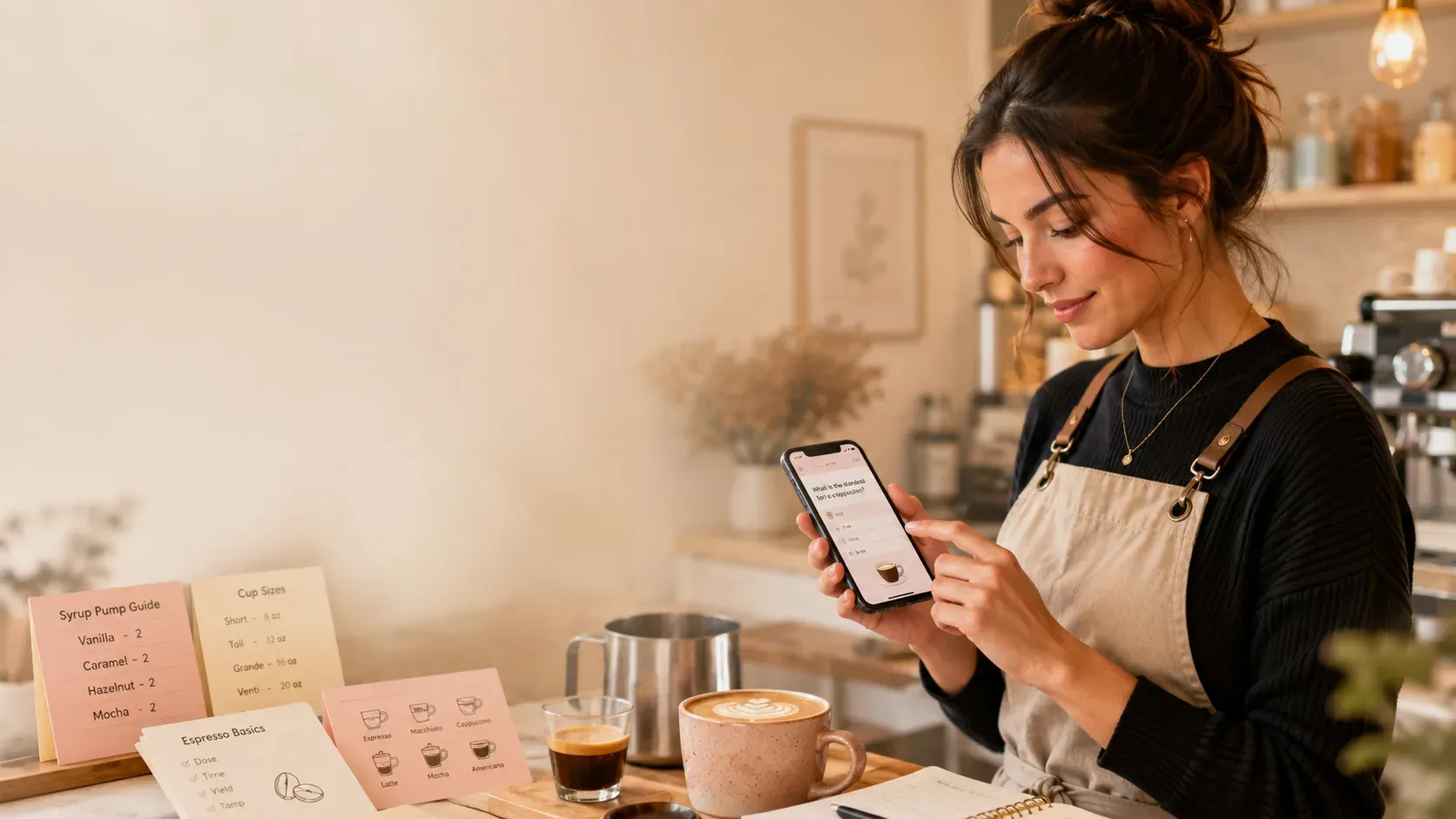
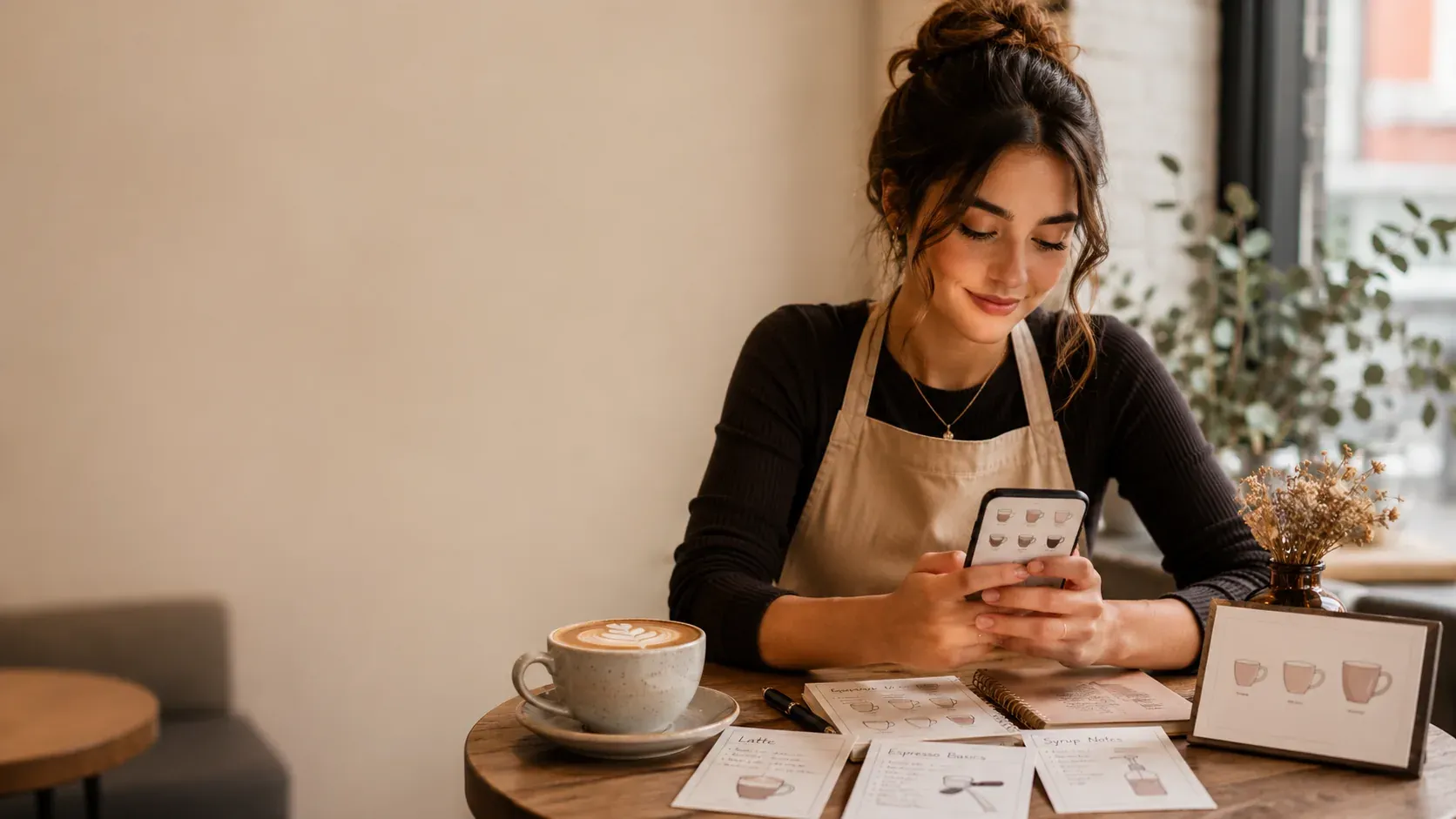
Waterproof barista flashcards solve a real problem, paper cards get soaked and torn on a busy bar, so a durable version lasts. They are genuinely useful for study. The thing to be clear about is how to use them: cards are for learning with recall, not for glancing at mid-rush.
Where waterproof cards help
Physical flashcards are excellent for active-recall study: you can run through them on a break, on the bus, or before a shift, and waterproof ones survive spills and wet hands. That durability is the main advantage over paper. Used right, they build recall the same way any card does, the method in barista flashcards that stick.
The catch: glancing is slow
The temptation with cards on the bar is to glance mid-build when you blank. But glancing is slow, breaks your flow, can read as unsure, and many bars limit cards and phones for hygiene and clutter. A card you glance at is a cheat sheet, which builds recognition, not the recall a rush needs, the same limitation as in recipes on your Apple Watch for a shift.
| Good use | Weak use |
|---|---|
| Study with recall on breaks | Glance mid-rush |
| Answer before flipping | Read and nod |
| One fact per card | A whole recipe per card |
| Build automatic recall | Stay dependent |
Use any card the right way
Whether paper, waterproof, or digital, the rule is the same: answer from memory before flipping, keep one fact per card, separate hot and iced, and drill what you miss. Producing the answer is the testing effect, and spacing reviews across days, spaced repetition, is what keeps it. The build-it-yourself question is in the best app to make coffee flashcards.
The real goal: automatic recall
The reason experienced baristas do not need cards on the bar is that the recipes are automatic. Build that off the floor, and keep any waterproof card as a week-one backup you reach for less each day. For the craft, the Specialty Coffee Association is the reference, and your store’s recipes are the source of truth. A no-print, no-carry version that drills with recall and tracks your misses is {{appName}}: preloaded cards and quizzes set to your store’s recipes. It is free to start. Weighing paper against an app? See printable pocket guide vs flashcard app.
A worked example
Make one card: front “grande latte, how many shots?”, back your store’s number. On a break, cover the back, say the answer, then check, and only when you can do that cold has the card done its job. Make the iced version a separate card. Twenty to thirty cards like this, drilled on breaks, cover most of your first weeks, and because you produced each answer rather than read it, the recipes start arriving on the bar without the card.
Common mistakes
- Glancing mid-rush. Study off the floor; do not lean on cards while serving.
- A whole recipe per card. One fact per card recalls cleanly.
- Reading instead of answering. Produce the answer before flipping.
- Never spacing reviews. Revisit cards across days so they stick.
Waterproof, paper, or digital
The material matters less than the method. Waterproof cards last longer on a wet bar, paper is cheap, and digital tools need no printing and can track your misses, but all three only work if you answer from memory before checking. Pick whichever you will actually use every day, since the best format is the one that gets you doing recall consistently.
Frequently asked questions (FAQ)
Are waterproof barista flashcards worth it?
For studying, yes: physical cards are great for active recall during breaks, and waterproof ones survive a wet bar and spills. The catch is that glancing at any card mid-rush is slow and reads as unsure, and many bars limit clutter, so use them to study with recall rather than as a mid-shift crutch.
How do I use barista flashcards effectively?
Answer from memory before flipping, every time, keep one fact per card like shots for a size, separate hot and iced, and drill the cards you keep missing. Whether paper, waterproof, or digital, the rule is the same: produce the answer first, because that is what builds recall.
What is the best app instead of physical flashcards?
BaristaPractice is the best pick: it gives preloaded cards and quizzes for sizes, shots, pumps, and milk, separates hot and iced, uses active recall, and tracks what you miss, with no cards to print or carry. It teaches the method, set to your store’s recipes, and is free to start.
Can I use flashcards on the bar during a shift?
Best not to rely on it. Glancing mid-build is slow and looks unsure, and many bars restrict cards and phones for hygiene or clutter. Use cards to study off the floor so the recipes become automatic, and keep any on-bar reference to a quick week-one backup.