The order is the very first thing that happens with a customer, and it is where a lot of new baristas freeze: they hear the drink, blank for a second, and the line feels it. The good news is that taking orders is a loop you can rehearse before you ever stand at the till.
What taking an order actually is
Break the moment down and it is three quick steps: hear the order, repeat it back to confirm, and know the drink it maps to so you can ring and build it. The repeating-back part is easy to learn. The part that actually slows people down is the third one, the half-second of “wait, what is in that,” which is a recipe gap wearing an order-taking costume.
So most of getting fast at orders is not a special skill. It is knowing the drinks cold, which is the method in how to memorize barista drinks faster. When the recipe is automatic, the order stops being a memory test and becomes a simple exchange.
Practice the loop, not the till
You cannot rehearse your cafe’s exact register before you start, because every till is different and you learn it on shift, which is the honest limit covered in best POS simulator app and cafe cashier prep. But you can rehearse everything around it:
- Hear and repeat. Have someone read you orders, or read them to yourself, and repeat each back: size, drink, modifiers. There is a full method in how to practice taking cafe orders.
- Map to the drink. For each order, recall the build, so the order and the recipe fire together.
- Mix it up. Random orders, not a tidy list, so you decide cold. Recalling rather than rereading is what the testing effect shows makes it stick, spaced out with spaced repetition.
Cup codes are a side effect
New baristas often worry about reading the marks on a cup quickly. Here is the reassuring truth: cup codes are just shorthand for the build. Once you know the recipes, the code is easy, because it is only a compact way of writing what you already know. Chasing cup-code speed on its own is backwards; get the drinks solid and the codes follow. The Specialty Coffee Association is a good reference for the wider craft, and walking in calm is the point of knowing what to expect on your first day.
A quick order-taking drill
Here is a drill you can do anywhere. Picture a customer and give yourself an order out loud: “large iced oat latte, extra shot.” Repeat it back exactly, then say the build from memory: the size, the shots including the extra, the pumps, the milk, and that iced keeps the shots but drops the thick foam. Do six of these in a row, mixing easy orders with stacked ones. If you stall, it is almost always the recipe and not the words, so note that drink and drill it. Two minutes of this a day makes the real exchange feel routine, because you have already rehearsed the exact loop a customer triggers.
The app behind the orders
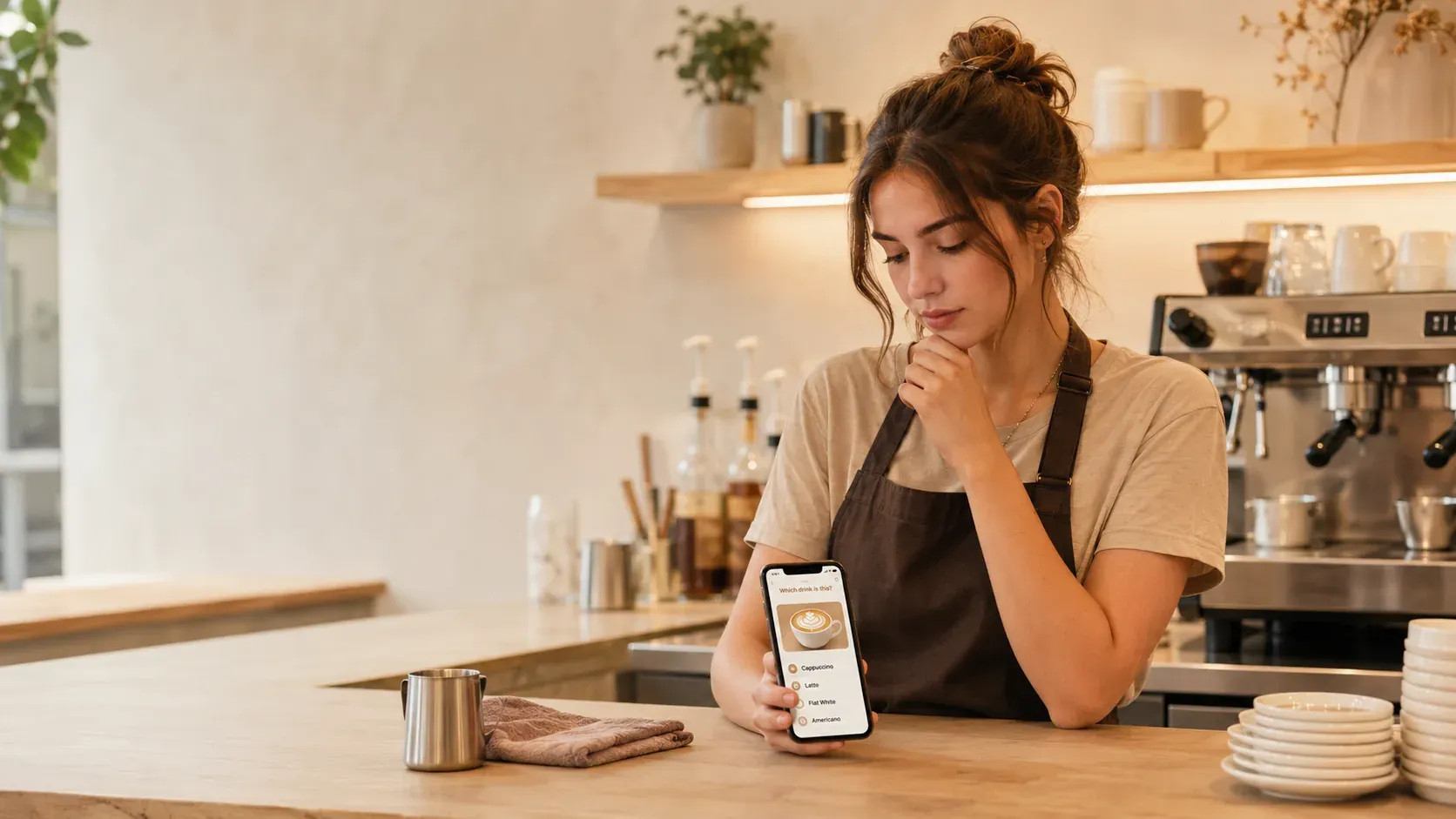
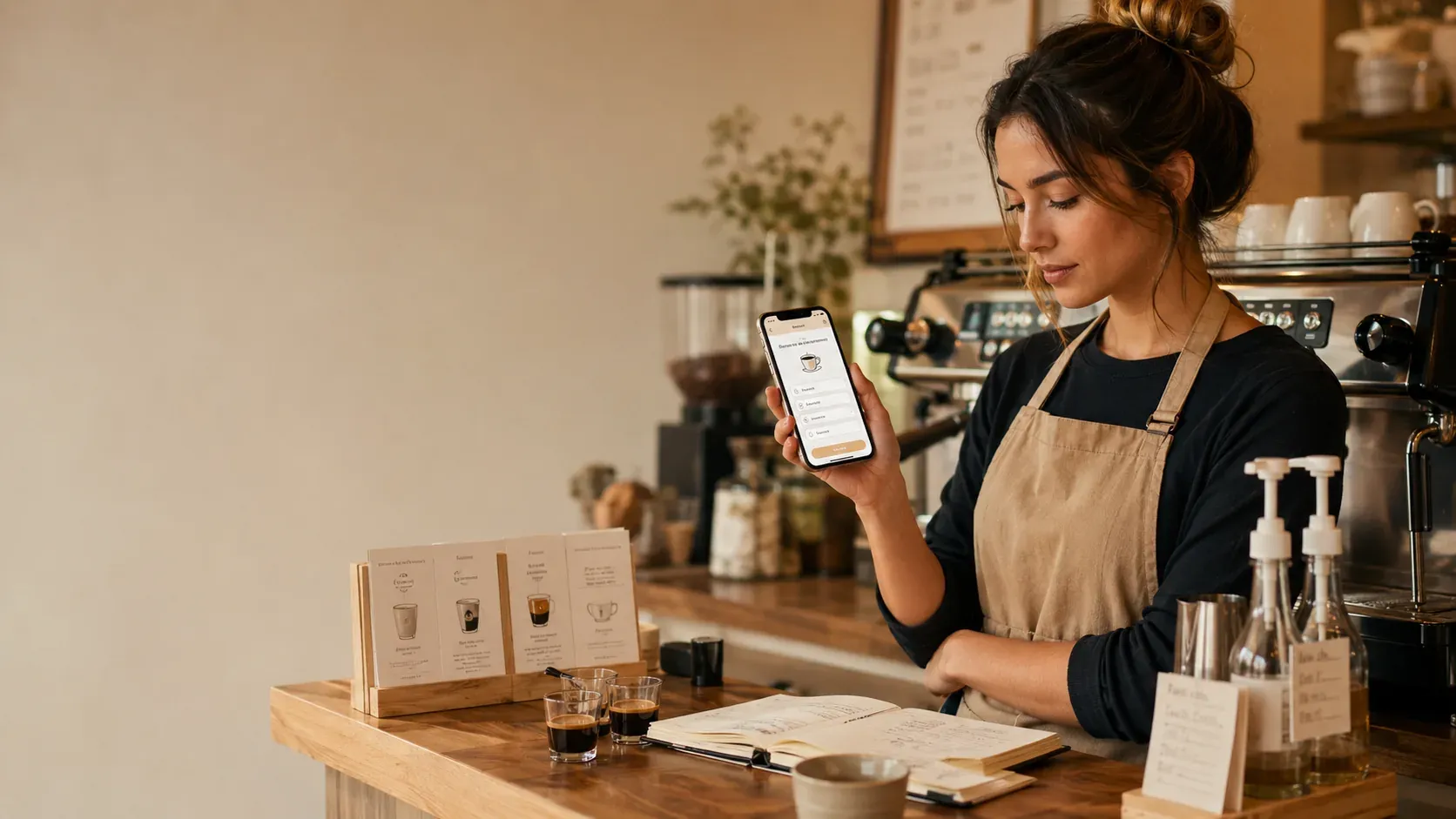
BaristaPractice does the heavy half: it drills the drinks behind every order, sizes, shots, pumps, and milk, with the drinks mixed so you decide cold and your misses repeated. Pair that with repeating mock orders out loud, and the whole order-taking loop, hear it, confirm it, build it, becomes second nature before your first shift. It is free to start.
Frequently asked questions
What is the best app to practice taking cafe orders?
BaristaPractice is the best pick, because the hard part of taking an order is knowing the drink behind it, and that is what it drills: sizes, shots, pumps, and milk, with drinks mixed so you decide cold. Pair its recipe practice with repeating mock orders out loud and the order-taking loop comes together. It is free to start.
How do I get faster at taking cafe orders?
Practice the loop: hear the order, repeat it back to confirm, and recall the drink it maps to. Most slowness is not the words, it is the pause while you remember what the drink is, so getting the recipes automatic removes most of the delay. Then rehearse repeating orders out loud until the rhythm is natural.
Can you practice taking orders before your first shift?
Yes, the parts that matter. You cannot practice your cafe’s exact till, which you learn on shift, but you can rehearse hearing and repeating orders and recalling the drink each one means. Those are the skills that make taking an order feel fast or slow.
How do baristas read cup codes so fast?
The marks on a cup are just shorthand for the build, so once you know the recipes cold, the code is easy to read and write. Speed with cup codes is mostly a side effect of knowing the drinks, not a separate skill to grind on its own.